


Ultimate K2 Guide: Everything About The Second-Highest Mountain
K2 is the second highest mountain in the World, at 8,611 metres (28.251 feet), and it is part of the Karakoram Range that spans Pakistan’s north border. It’s also one of the most dangerous and difficult mountains to climb.
The Almighty K2 is one of the eight-thousanders; moreover, it belongs to the exclusive list of Earth’s 14 highest mountains, which are detailed below.
- Mount Everest – 8,849 m
- K2 – 8,611 m
- Kangchenjunga – 8,586 m
- Lhotse – 8,516 m
- Makalu – 8,485 m
- Cho Oyu – 8,188 m
- Dhaulagiri I – 8,167 m
- Manaslu – 8,163 m
- Nanga Parbat – 8,126 m
- Annapurna I – 8,091 m
- Gasherbrum I – 8,080 m
- Broad Peak – 8,051 m
- Gasherbrum II – 8,035 m
- Shishapangma – 8,027 m
Unlike Mount Everest, which has become highly commercialized, K2 remains one of the last true tests of elite mountaineering skill, challenging climbers with its unforgiving terrain and extreme conditions

It is a brutally high and hard climb, with unpredictable weather and steep ice walls. With a high death toll and an unpredictable death rate, this has become the benchmark for the toughest climb in the world.
Here are five reasons why it’s hard:
Altitude:
The trail climbs over K2 Base Camp at 5,150 meters (16,900 feet). There’s also a risk of altitude sickness, so you’ll need to acclimate properly to avoid potential symptoms such as headaches, dizziness or nausea.
Length and time of trek:
The duration of the trek is generally 12-14 days for a one way distance of approximately 90 km (56 miles). It’s a long, tough trip with lots of up and down.
Terrain:
The way goes over stony paths, glaciers, the fording of rivers and rough ground. The hiking can be challenging and require some level of physical conditioning and surefootedness.
Basic Infrastructure:
Unlike luxury expeditions, trekking to K2 Base Camp does not offer fancy meals, plush accommodations, or upscale camping facilities. Instead, you will camp along the route, often in very basic conditions. Therefore, it is important to be prepared for chilly nights and unpredictable weather throughout the journey
Physical Fitness:
Since you will be trekking through steep and challenging terrain at altitudes above 5,000 meters for extended periods, a high level of physical fitness is therefore essential. Trekkers need to train by doing cardiovascular and strength training exercises, especially focusing on endurance.
Where Is K2 Located?
K2, the second-highest mountain in the world, rests in the Gilgit-Baltistan region of the Pakistan-administered territory of the Karakoram range, at the border of Pakistan and China.
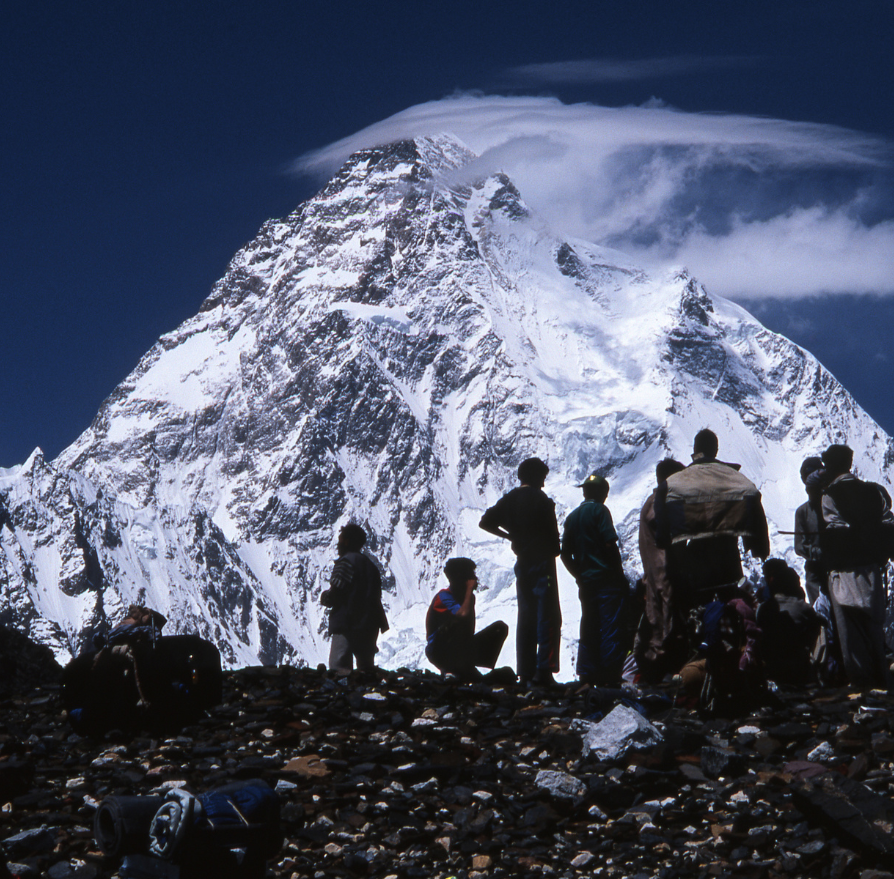
K2 is located in the Baltistan region of Northern Pakistan and borders the Xinjiang region of China. Although the peak is split by the border, all significant climbing expeditions are done on the Pakistani side.
K2 is also located in the Central Karakoram National Park, which is one of the largest mountain treks on the planet, and is positioned just south of the Baltoro Glacier, which is the second longest glacier in the world (after the polar glaciers).
The nearest large settlement to K2 is Skardu, and from there, climbers and trekkers can continue by jeep to the village of Askole, which is the furthest settlement before entering the glacier fields that lead to the K2 base camp.
Is K2 taller than Everest?
Although Mount Everest at 8849 meters is taller than K2, which stands at 8611 meters, it poses additional difficulties and challenges which make it one of the most challenging climbs of the 8,000-meter peaks.
Why Is K2 Called “The Savage Mountain”?
K2 mountain prefix “The Savage Mountain’ comes from, as it is one of the deadliest mountain to climb. That was the K2 author Ardito Desio.
The nickname pretty much describes what it is to climb K2 in person. People compare it to Mount Everest which has a lot of areas that are just kind of ramp up, But K2 is like going over tough rock and ice climbing at a high difficulty level from the very first footstep until you reach the summit.
There are a few things that explain this title:
- Extremely steep slopes
- Frequent avalanches
- Dangerous hanging glaciers (seracs)
- Sudden weather changes
- Narrow summit windows
One of the most feared sections of K2, around 8,200 meters, is the Bottleneck, where climbers face extreme danger from overhanging ice, seracs, and steep terrain.
The legacy of these hazards is a reminder of how deadly K2’s climbing can be, which is part of the reason that K2 remains one of the most coveted peaks to climb.
How Dangerous Is K2 to Climb?
The mortality rate on an average K2 summit is typically around 20 to 25 percent. That means one in four people who make it to the top of K2 don’t come back.
Among other major summits, the death rate for K2 is unusually high. Aided by modern climbing gear, and weather prediction, it might have taken the edge off some of the risk in summit attempts – but there is no question that K2 remains an extremely dangerous mountain – certainly too dangerous to climb in winter time:
- snow-initiated avalanches
- icefall collapse – when overhanging seracs collapses onto itself
- severe and dangerous high winds and storms
- temperatures below -40 C
- high-altitude cerebral edema (HACE)
- high-altitude pulmonary edema (HAPE)
2008 was also thought of as a tragic climbing season because 11 climbers died that year after the ice near the Bottleneck collapsed. Situations like this remind us of why K2 remains among the most unsafe high-altitude climbs.
How Many People Have Climbed K2?
Reaching the summit of K2 is one of the most exclusive accomplishments in the world of high-altitude mountaineering. Since its first successful ascent in 1954, only roughly 800 to 850 climbers have stood on its 8,611-meter peak. In contrast, Mount Everest has recorded many thousands of summits over the years. K2, however, remains far less frequented, and in some years harsh weather conditions prevent anyone from reaching the top at all.
The limited number of summits reflects more than just elevation , it highlights the mountain’s demanding nature. K2 is known for steep, exposed sections, unpredictable storms, and serious objective hazards that require advanced technical ability and strong decision-making under pressure. Over the decades, approximately 90 to 100 climbers have lost their lives attempting the ascent, reinforcing its reputation as one of the most formidable peaks on Earth. Standing on K2’s summit is not merely about reaching a high point it represents endurance, expertise, and respect for one of nature’s toughest challenges.
What Are the Main Routes on K2?
The main ways to K2 are via the
- Abruzzi Spur (Southeast Ridge)
- North Ridge
- South-Southeast Spur
- West Ridge
- Magic Line
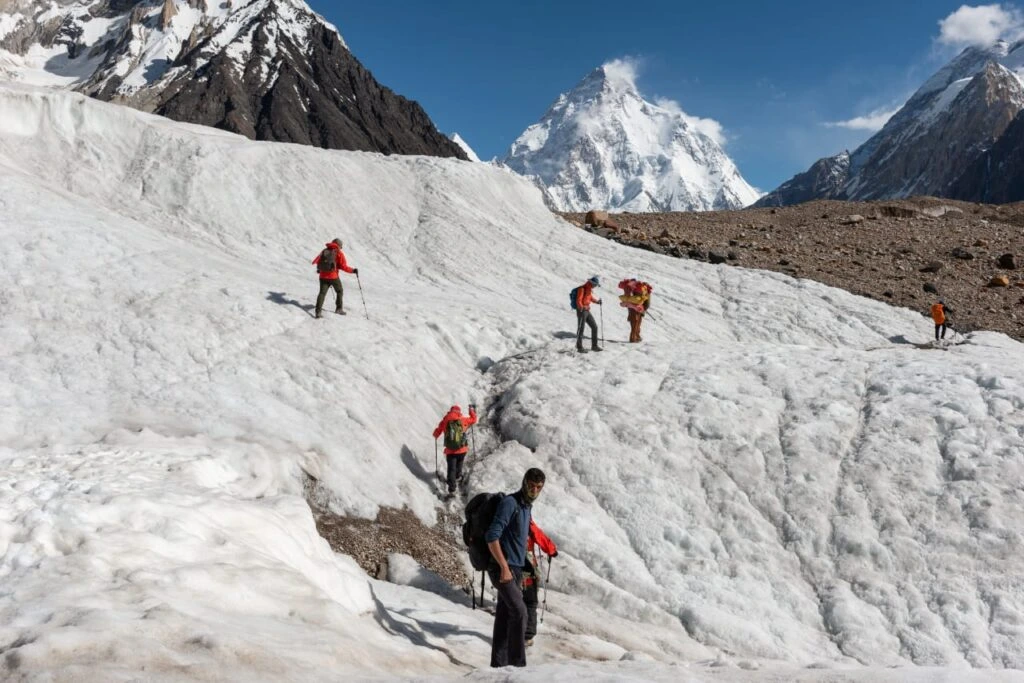
The other six routes are the least used approaches to the world’s highest mountain, and that is a boon for climbers wanting to escape the crowds, but each has its difficulties. “Let’s say you’re on a Himalayan peak,” said Billi Bierling from Everest Base Camp in 2017, after she had climbed five of those lines.“No matter which one it is,”she added, “it requires a lot of effort and training.” Here they are: The Abruzzi Spur Climbers rest at Camp Three earlier than expected The route taken by Italian legend Reinhold Messner when he made what’s considered the first successful ascent without supplemental oxygen (Earlier attempts may have succeeded as well.) in 1980.
The Polish Route is one of most dangerous and least frequently climbed.
Finally, it’s estimated that the Magic Line is one of the hardest lines to climb on K2.
All lines of ascent on K2 are extreme challenges, but the Abruzzi Spur method is initially at least the easiest and therefore held as the yardstick to measure any other challenge a mountaineer might encounter.
The K2 mountain was created by an impact between the Indian and Eurasian tectonic plates when the The Himalayas and The Karakoram were formed.
Even now, the tectonics that brings about earthquakes and unrest in this region is still at work. This systematic erosion and uplift causes the rough steepness of K2.
Geology of the mountain explains why it has such features and is so dangerous to climb.
Trekking to K2 base camp is not a problem for the pros, but fit civilians can way too.

The route consists of the subsequent process.
- Arrival in Skardu
- Jeep ride to Askole
- Trek across the Baltoro Glacier
- Stop at Concordia
- Go past Broad Peak Base camp
- Arrive at K2 Base camp
The hike is a 12- to 14-day round trip with stunning vistas of many of the world’s most iconic peaks.
When Was K2 First Climbed?
The first ascent of K2 was finally made by an Italian expedition led by Ardito Desio on July 31, 1954.. It was conquered by climbers Achille Compagnoni and Lino Lacedelli. This was particularly significant as the peak had seen many efforts by other expeditions on the increase of their failed attempts.
For years the vast majority of climbers who had reached the 8436 meter high top did so with considerable trouble – and that was thanks in part to the peaks vertical walls and temperamental nature.
2021 would see K2 record yet another historical first: The peak was summited successfully, for the first time in winter. This triumph was a new page in the history of mountaineering.
K2 Base Camp Trek with Skardu Trekkers
The K2 Base Camp Trek is not just a hike — it is a powerful journey into one of the wildest mountain landscapes on Earth. Organized by Skardu Trekkers, this expedition takes you deep into the legendary Karakoram Range, where raw nature, towering ice walls, and endless glaciers define the horizon.
Your adventure begins from Askole, the last inhabited village before entering true wilderness. From there, the trail follows the mighty Baltoro Glacier — one of the longest non-polar glaciers in the world. As you move forward, the scenery transforms dramatically. Granite spires like Trango Towers rise sharply from the earth, and each campsite feels more remote and breathtaking than the last.
One of the most unforgettable highlights of this trek is Concordia — often called the “Throne Room of the Mountain Gods.” Here, you stand surrounded by some of the world’s highest peaks, including K2. From Concordia, the final stretch leads toward K2 Base Camp at approximately 5,100 meters, where you witness the immense scale of the world’s second-highest mountain up close.
This trek does not require technical climbing skills, but it demands strong stamina, mental resilience, and proper acclimatization. Long walking days, glacier crossings, and high altitude make it a serious adventure but one that rewards you with unmatched alpine beauty.
Best Time to Visit K2 Base Camp
The trekking season in the K2 region is short and very specific.
The most suitable months are late June to late August. During this period:
- Weather conditions are comparatively stable
- Snow accumulation is lower on the trail
- Skies are clearer, offering better mountain views
- Access to Skardu is more reliable
July and August are generally considered peak months. However, even during summer, temperatures at higher camps can drop below freezing at night. Sudden weather shifts are common in the Karakoram, which is why proper gear and experienced guides are essential.
Spring and autumn treks are possible but risk colder temperatures and unstable weather. Winter expeditions are extremely challenging and not recommended for standard trekking groups.
Why K2 Is Important for Pakistan
K2 is far more than a mountain — it is a national symbol of strength, resilience, and natural grandeur.
As the second-highest peak in the world, K2 places Pakistan at the center of global mountaineering history. Every year, trekkers and climbers travel from across the world to witness its dramatic beauty, contributing directly to tourism and the local economy of Gilgit-Baltistan.
For Pakistan, K2 represents:
- International recognition in adventure tourism
- Economic opportunities for local communities
- A source of national pride
- A showcase of the unmatched landscapes of the Karakoram
Through responsible tourism, companies like Skardu Trekkers help promote Pakistan’s positive image globally while supporting local porters, guides, and hospitality services.
How to Book a K2 Base Camp Trek with Skardu Trekkers

Booking your adventure with Skardu Trekkers is simple and professionally managed.
Step 1: Choose Your Travel Window
Select dates within the main trekking season (June–August).
Step 2: Contact Our Team
Reach out to Skardu Trekkers for itinerary details, pricing, and customization options.
Step 3: Permit & Documentation Support
We assist in arranging required trekking permits and guide you through the visa process (for international travelers).
Step 4: Logistics & Preparation
From airport pickup in Skardu to transport, camping arrangements, meals, and experienced guides everything is handled by our team.
With Skardu Trekkers, you focus on the adventure we handle the rest.
Ready to Explore the Karakoram?
Check the itinerary, trekking dates, and trip details for your journey to K2 Base Camp.
Frequently Asked Questions (FAQs)
Is K2 harder than Everest?
Yes, in terms of summit climbing, it is considered significantly more technical and dangerous than Everest. However, the K2 Base Camp Trek is a trekking expedition, not a summit climb. It is physically demanding but does not require mountaineering skills.
Can beginners climb K2?
No. it is one of the most technically challenging mountains in the world and is not suitable for beginners. Only highly experienced mountaineers attempt its summit.
How long does it take to summit K2?
A full K2 climbing expedition typically takes around 6–8 weeks, including acclimatization and weather waiting periods.
What permits are required for K2 Base Camp Trek?
Trekkers require a trekking permit for the Central Karakoram region. Foreign visitors also need a valid Pakistan visa. Skardu Trekkers assists in managing the permit process.
How cold does it get on K2?
At base camp during summer, night temperatures can fall below freezing. At higher altitudes during summit expeditions, temperatures can drop far below zero with severe wind chill.



Comments are closed