


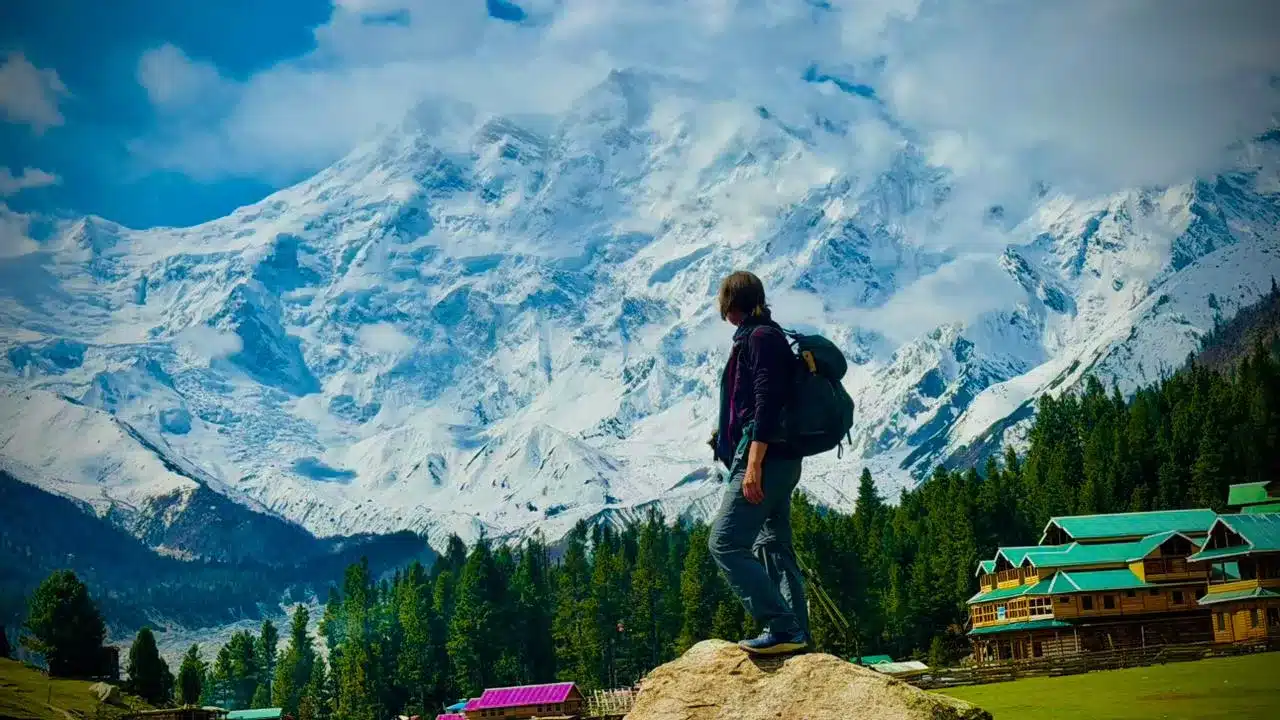
Nanga Parbat – The Killer Mountain
Introduction
Nanga Parbat earned the name “Killer Mountain” because of the toll it took in the early decades of Himalayan climbing. At least 31 climbers died on its slopes before anyone reached the top in 1953. The mountain stands 8,126 m (26,660 ft) high, ranks ninth in the world, and remains one of the most dangerous of the fourteen eight-thousanders. Violent weather, avalanche-prone faces, and near-total isolation make it lethal to climb. The trek to its base, though, is well within reach of a fit walker.
Quick facts about Nanga Parbat
Nanga Parbat is the western anchor of the Himalaya and the second-highest mountain in Pakistan after K2. Its name means “Naked Mountain.” Local people call it Diamer, which is also the name of the district it sits in. The peak is known for two things above all: a fearsome climbing record, and the largest mountain face on Earth.
| Field | Value |
| Height | 8,126 m (26,660 ft) |
| Ranking | 9th in the world; 2nd in Pakistan |
| Range | Western Himalaya |
| Location | Diamer District, Gilgit-Baltistan, Pakistan |
| Nickname | Killer Mountain; locally “Diamer” |
| First ascent | Hermann Buhl, 3 July 1953 |
| First winter ascent | 26 February 2016 |
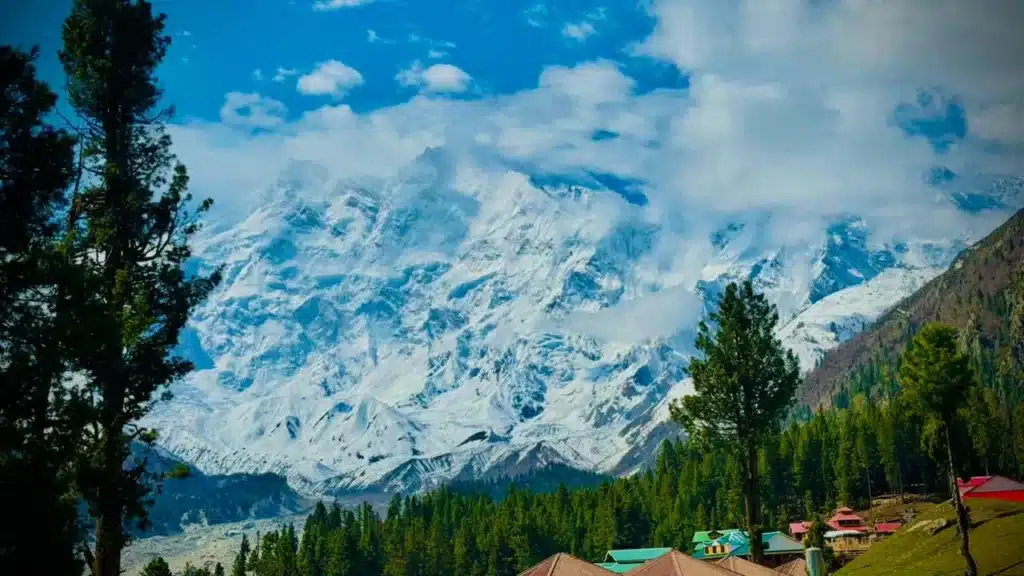
Why is Nanga Parbat called the Killer Mountain?
Nanga Parbat is called the Killer Mountain because at least 31 climbers died trying to summit it before the first successful ascent in 1953 one of the deadliest records in mountaineering history.
The first deaths came in 1895. The British climber Albert Mummery attempted the peak in lightweight style, decades ahead of his time. He and two Gurkha companions, Ragobir Thapa and Goman Singh, disappeared while crossing to the Diamir side. No trace of them was ever found. Their loss was the first chapter in a long record.
The mountain’s reputation hardened in the 1930s, when German and Austrian teams attacked it again and again. A first German expedition under Willy Merkl in 1932 tried the Rakhiot Face and failed, but returned two years later with more men and higher ambitions. That 1934 expedition ended in catastrophe. In July, a storm trapped climbers high on the Rakhiot Face for days. The expedition leader Willy Merkl died there, along with the climbers Willi Welzenbach and Uli Wieland and six Sherpa porters. The German press of the era began calling Nanga Parbat the “mountain of German destiny,” which only drew more expeditions to its slopes.
The worst single disaster came three years later. On the night of 14–15 June 1937, a serac broke loose above Camp IV and released a massive avalanche. It killed 16 people as they slept seven German climbers and nine Sherpas. It remains one of the deadliest events in the history of high-altitude mountaineering.
By the time Hermann Buhl reached the summit in 1953, the mountain had claimed 31 lives. The deaths did not stop there. Nanga Parbat still holds one of the highest death-to-summit ratios of any eight-thousander historically, close to one death for every five people who reached the top.
How dangerous is it really?
Nanga Parbat is dangerous to climb because of three things working together: extreme weather, constant avalanche risk, and total isolation. Each one feeds the others.
The peak rises almost alone above the Indus valley. It has the second-highest prominence of any mountain in the world’s top 100, behind only Everest. Prominence measures how far a summit stands above the land around it, and Nanga Parbat towers more than 4,600 m over its surroundings. That isolation acts like a magnet for bad weather. Storms build against the massif and break with little warning, and there is no sheltered ground to wait them out.
The faces are vast and steep, so snow loads pile up quickly and release as avalanches that scour entire routes. Unlike Everest, the mountain offers no obvious line to the top and no chain of fixed ropes and ladders to speed a retreat. Help is scarce. Helicopters cannot reach the high camps, so a climber in trouble above 6,000 m (about 19,700 ft) is often beyond rescue. Several modern climbers have died here even with good forecasting and equipment. The winter of 2018 showed how quickly things turn: Tomek Mackiewicz died high on the mountain after reaching the summit, while his partner Elisabeth Revol was brought down in a dramatic rescue. Together with Annapurna in Nepal, Nanga Parbat is often ranked as the deadliest of the world’s major peaks, and the two trade the grim title as new fatalities occur.
One distinction matters more than any other. The mountain is deadly to climb, but you do not have to climb it to see it. The walk to base camp is a demanding but non-technical trek that a fit person can complete with a guide.
The three great faces (Rupal, Diamir, Raikot)
Nanga Parbat is a single massif with three enormous sides, each with its own character and climbing history. A massif is a large mountain mass that carries several tops and faces.
The Rupal Face (south). This is the tallest mountain face on Earth. It rises about 4,600 m (15,000 ft) from base to summit in one continuous wall of rock, ice, and snow. Reinhold and Günther Messner made the first ascent of it in 1970. Unable to climb back down the way they came, they descended the Diamir side instead the first traverse of the mountain. Günther died in an avalanche low on the Diamir Face, and his remains were not found until 2005.
The Diamir Face (west). This side holds the Kinshofer route, the standard line up the mountain today. It takes its name from the 1962 team that first climbed the face, and most modern expeditions follow it because it is shorter and more direct than the other routes. It is still steep, exposed, and prone to avalanche.
The Raikot Face (north). This is the Fairy Meadows side, and the route of Buhl’s 1953 first ascent. It is the face most travelers see, because the trek from Fairy Meadows leads straight to its foot across green pasture and pine forest.
Where is it and how tall? (summary)
Nanga Parbat stands 8,126 m (26,660 ft) high, which makes it the ninth-highest mountain in the world and the second-highest in Pakistan.
The mountain sits in Diamer District, in the Gilgit-Baltistan region of northern Pakistan, just south of the sharp bend where the Indus River turns west. It marks the western end of the Himalaya, the point where the great range gives way to the Karakoram across the river. The nearest town of note is Chilas, on the Karakoram Highway, which serves as the gateway to the Fairy Meadows side.
Climbing history in brief
Hermann Buhl made the first ascent on 3 July 1953. He climbed the final 1,300 m (4,300 ft) alone after his partners turned back, and he did it without supplemental oxygen, aided only by the stimulants climbers used at the time. Caught by darkness on the way down, he survived a night standing upright on a narrow ledge above 8,000 m, then reached his high camp some 40 hours after setting out. He remains the only person to make the first ascent of an eight-thousander solo.
Two later climbs stand out. In 1962, a German team opened the Diamir Face by what is now called the Kinshofer route, which became the standard way up the peak. In 1970, the Messner brothers climbed the Rupal Face and traversed the mountain, a landmark in Himalayan climbing that also cost Günther Messner his life.
The mountain resisted a winter ascent far longer than most. It was finally climbed in winter on 26 February 2016 by Simone Moro, Alex Txikon, and Pakistan’s Muhammad Ali Sadpara. For the full timeline from Mummery to the modern era.
Best Time To Visit
The best time for trekking and climbing Nanga Parbat is between June and September. During this time the weather is relatively stable and there is less snow, which is suitable for trekking and climbing.
Required Things
- Physical Fitness: Mountain climbing is tough, so good health and stamina are a must.
- Proper Gear: Trekking boots, warm clothing, sleeping bags, tents, and climbing equipment.
- Local Guide: It is very important to take an experienced guide to ensure safety.
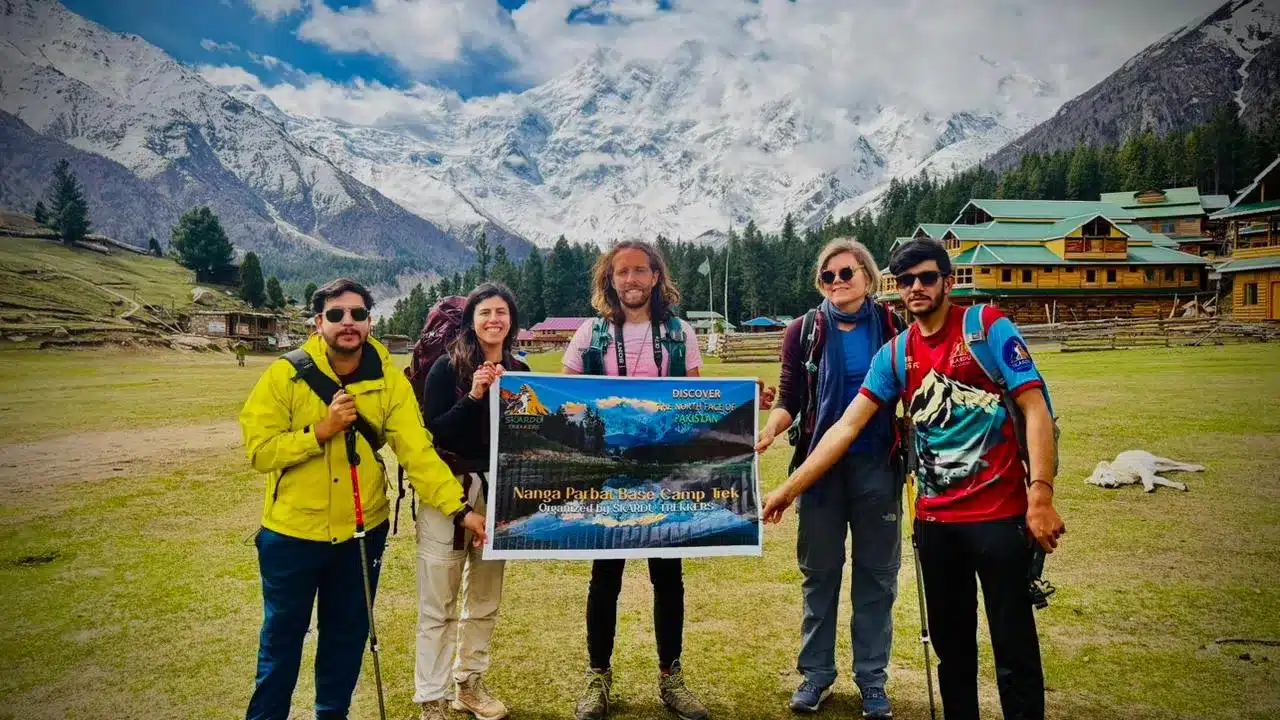
- Permits: It is mandatory to get trekking permits from local authorities. Skardu trekkers will do this work for you themselves.
How to see Nanga Parbat for yourself
You can stand in front of Nanga Parbat without any climbing experience. The classic option is the trek to Fairy Meadows and Nanga Parbat Base Camp on the Raikot side. German climbers named the grassland “Märchenwiese,” or Fairy Tale Meadow, and the name stuck. The route begins at Raikot Bridge on the Karakoram Highway, climbs by jeep to the village of Tato, then follows a forest trail to the meadows at about 3,300 m (10,800 ft), with the Raikot Face filling the skyline.
From there the trail continues past Beyal camp toward the base-camp viewpoint, where the north side of the mountain rises in full. Two clear paths exist, depending on your goal:
- Trekkers: the Fairy Meadows and Nanga Parbat Base Camp trek reaches viewpoints and base camp on foot. Good fitness is enough, and no technical skill is required.
- Climbers: a summit attempt is a full Nanga Parbat expedition of several weeks, with permits, high camps, fixed ropes, and serious objective risk.
The trekking season runs from June to September, when the meadows are green and the passes are clear. Our team is based in Gilgit-Baltistan and runs both the trek and the expedition, including transport, permits, and local guides. Message us on WhatsApp to plan your trip and lock in dates for the season.
Join Us and Explore With Skardu Trekkers
If you too want to be a part of this adventure of Nanga Parbat, then join Skardu Trekkers. We provide you safe and well-planned trekking experience, where you will get a real feel of local culture and nature at every turn.
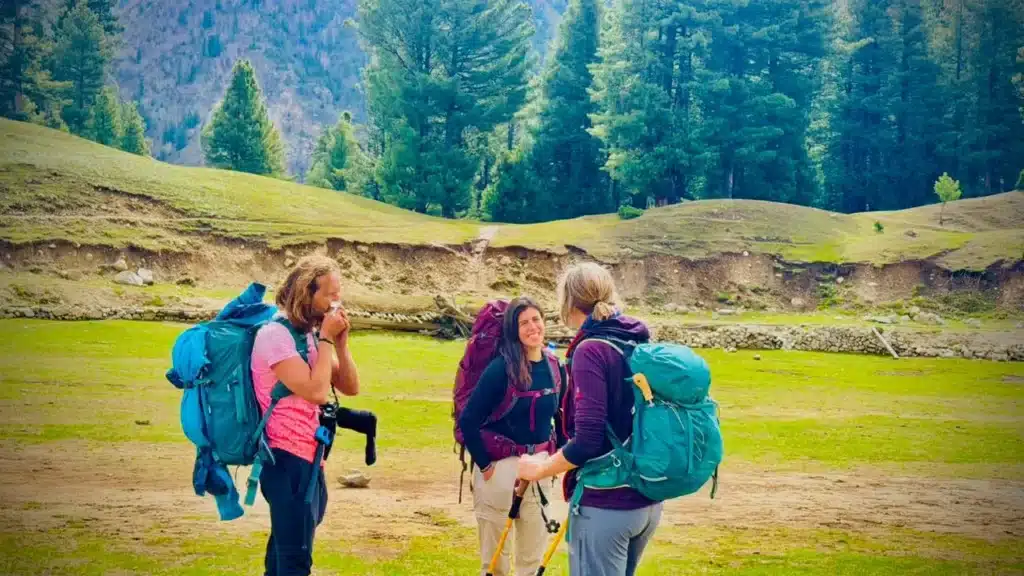
Our team will provide every possible help to make your trip memorable.
FAQS
Why is Nanga Parbat called the Killer Mountain?
Because more than 30 climbers died trying to summit it before the first successful ascent in 1953, giving it one of the deadliest reputations in mountaineering.
Is Nanga Parbat harder than K2?
Both are extremely dangerous. K2 is more technically difficult overall, while Nanga Parbat is known for deadly weather, avalanche risk, and the huge Rupal Face. See our full Nanga Parbat vs K2 comparison.
Can tourists visit Nanga Parbat?
Yes. Non-climbers can trek to viewpoints and base camp via Fairy Meadows. Summiting requires a full mountaineering expedition.
What type of mountain is Nanga Parbat?
It is an eight-thousander a peak that rises above 8,000 m and the westernmost major summit of the Himalaya. It is a single massif with three vast faces: Rupal, Diamir, and Raikot.
How tall is Nanga Parbat and where is it?
It stands 8,126 m (26,660 ft) high in Diamer District, Gilgit-Baltistan, Pakistan, at the western end of the Himalaya.
Who climbed Nanga Parbat first?
Austrian climber Hermann Buhl, on 3 July 1953, reaching the summit alone and without oxygen.





Comments are closed