


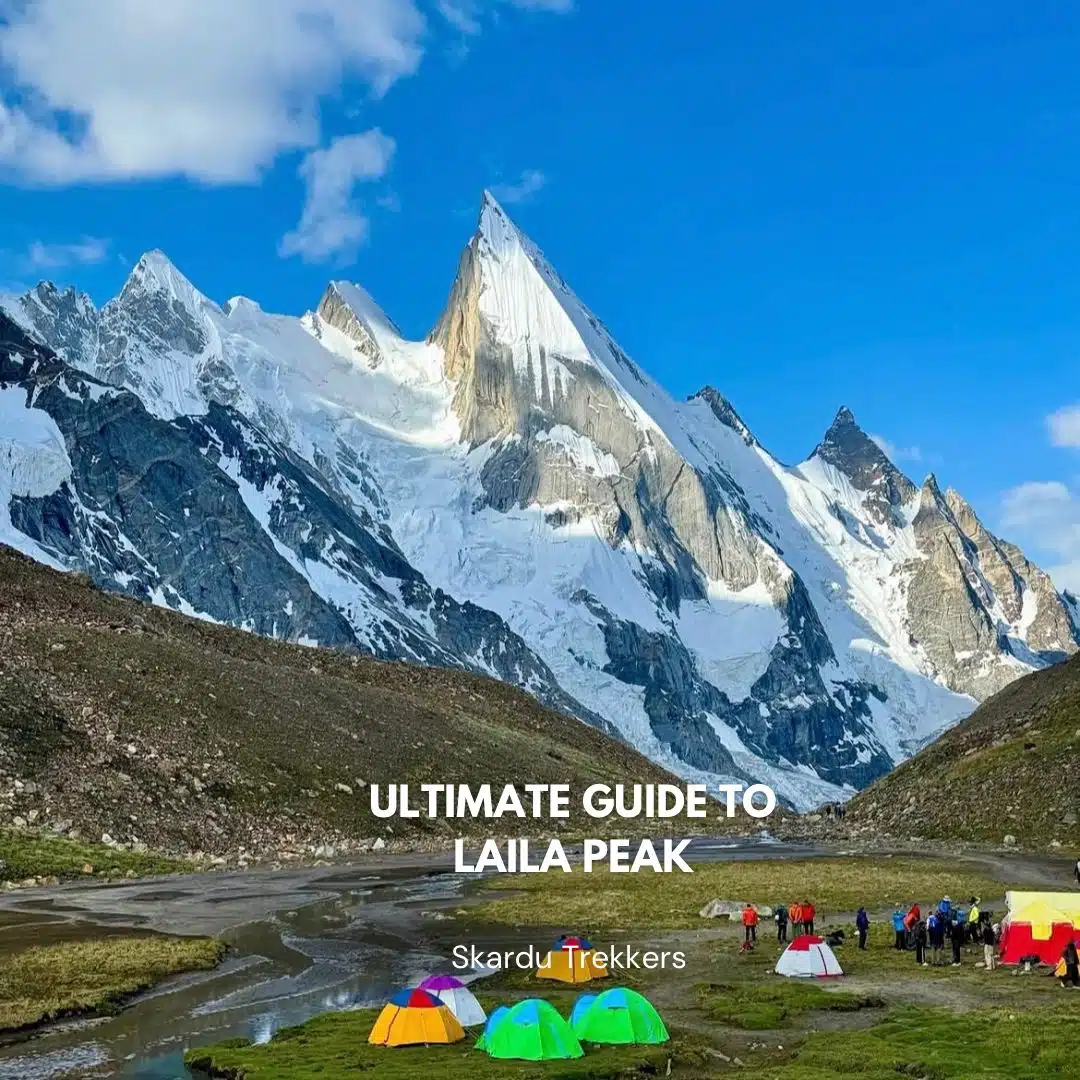
Laila Peak: Everything You Need to Know Before Climbing
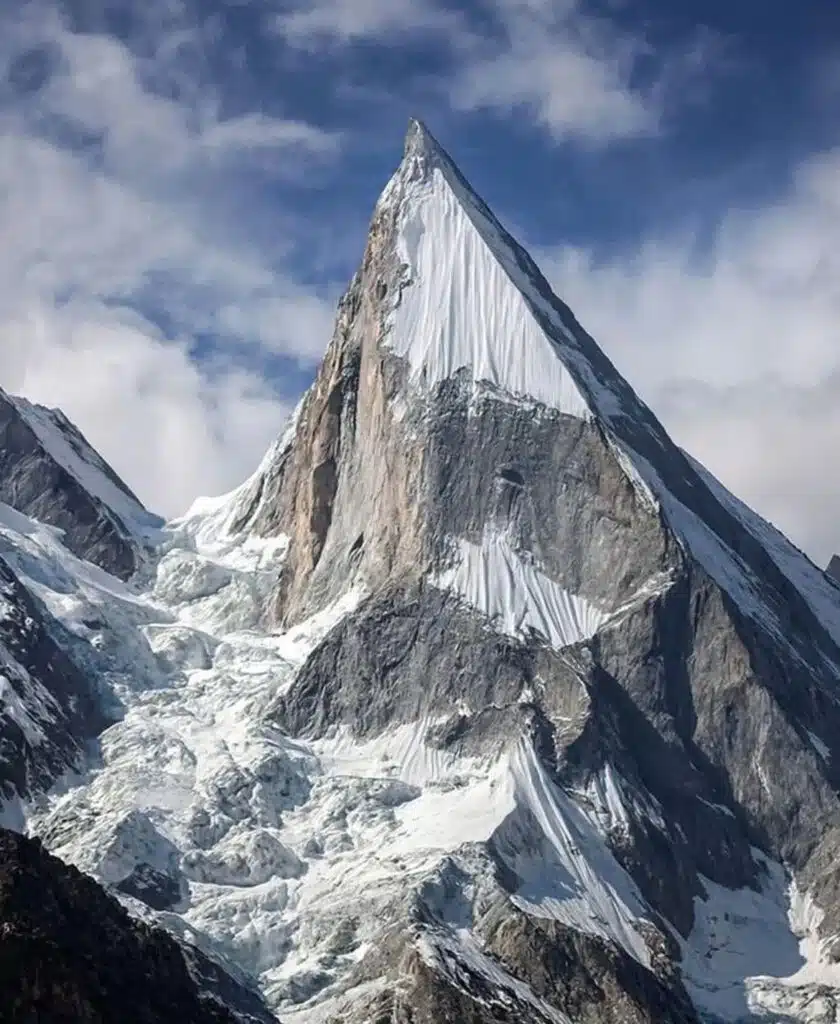
Hidden deep in the Karakoram, Laila Peak is one of the most striking mountains in Pakistan and one of the most demanding. Its sharp, spear-like summit and long, steep ice faces make it a serious objective even for experienced climbers.
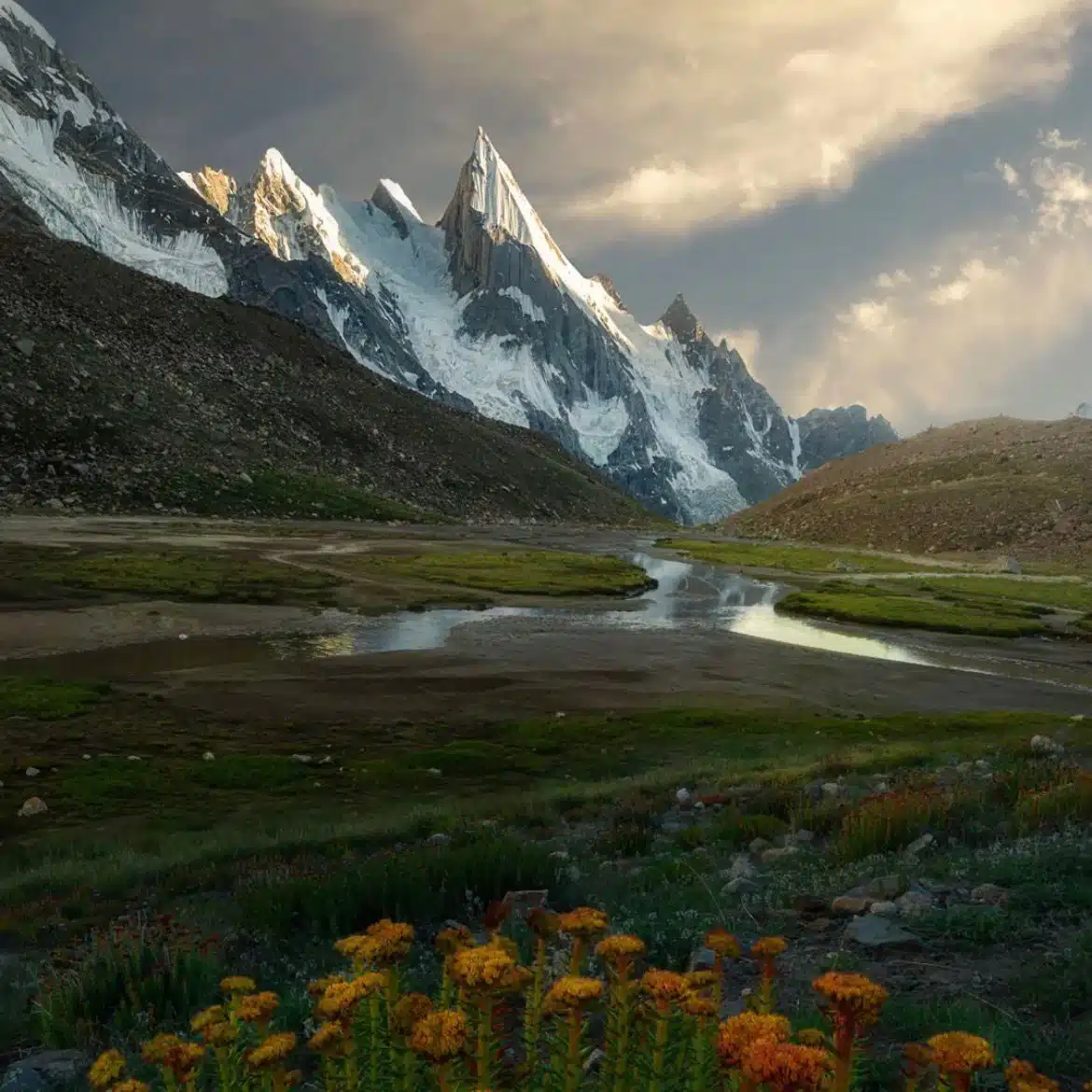
This guide explores Laila Peak difficulty, the main route, and the reality behind the extremely limited number of successful Laila Peak summit attempts, along with the risks often associated with the Laila Peak death rate.
How Difficult Is Laila Peak?
Understanding its difficulty starts with recognizing that this is a fully technical alpine climb, not a trekking peak.
- Grade: PD+ to AD (Alpine Difficile)
- Slope: 45–55° sustained snow and ice
- Altitude: Approximately 6,096 meters
Climbers attempting it must already be skilled in:
- Front-pointing on steep ice
- Using fixed ropes with ascenders (Jumar)
- Advanced crampon techniques
- Ice axe self-arrest
- High-altitude climbing above 5,000 meters
- Bivouac and alpine-style movement
This peak is not suitable as a first technical climb at altitude. Compared to other mountains, it is harder than trekking peaks like Mera Peak or Island Peak and can be compared in technical grading to lower sections of Ama Dablam though far more remote and committing.
The defining factor in Laila Peak difficulty is the continuous exposure. There are no easy sections, and climbers remain on steep terrain for most of the ascent.
If you are not a technical climber, Laila Peak is not the right objective for you but the base camp trek absolutely is. The trek reaches the foot of the mountain with no climbing skills required.
Want to Experience Laila Peak Without Climbing It?
You don’t need technical climbing experience to experience the incredible Laila Peak. Trek to its base camp through the spectacular Karakoram with experienced local guides and complete trekking support.
The Northwest Face, Primary Route
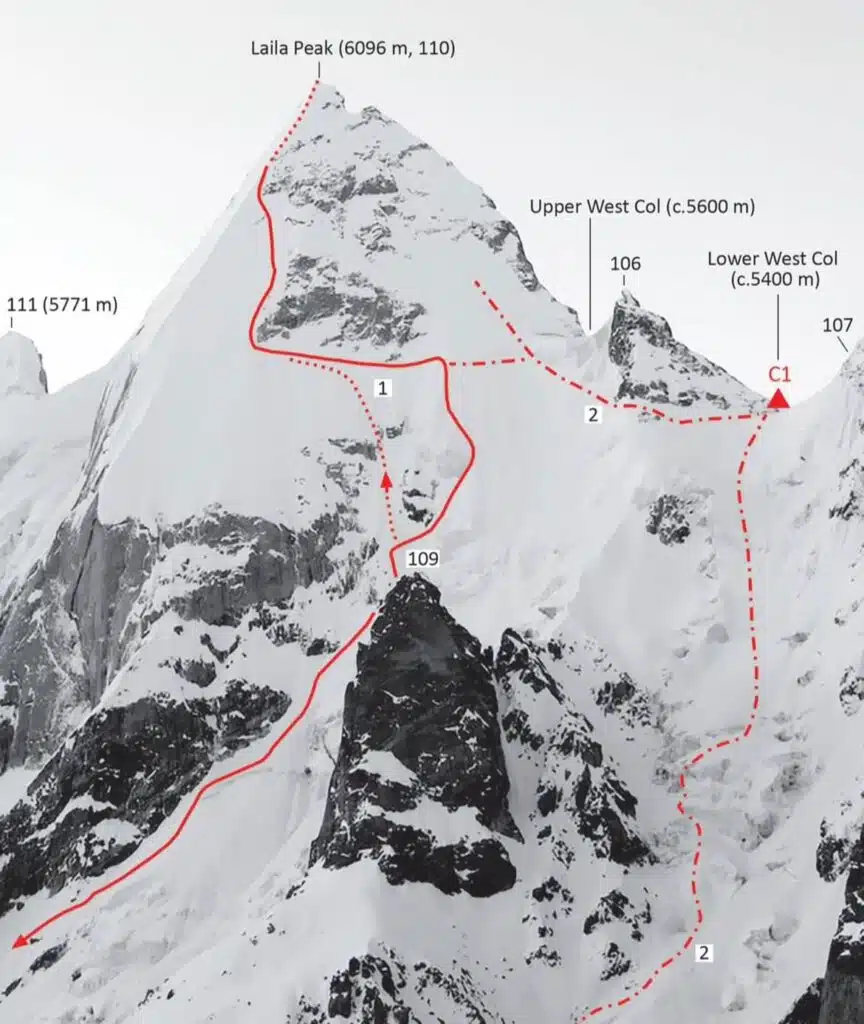
The most commonly attempted Laila Peak route is the Northwest Face, considered the standard line since the late 20th century.
The approach begins via the Gondogoro Glacier, leading to the upper west col. From there, climbers traverse onto the Northwest Face, which rises for around 1,500 meters in sustained 45° snow and ice.
There is no variation in difficulty across this face it remains consistently steep throughout. Near the top, the route narrows into a sharp summit ridge, requiring careful and exposed climbing to reach the Laila Peak summit.
Descent is typically made via the same route, although some teams descend using the west ridge, involving multiple rappels. Because of the steepness and exposure, descending is often as demanding as the ascent.
The West Face : 1987 Original Route
The first ascent of Laila Peak in 1987 followed the West Face, climbed by Simon Yates, Andy Cave, Sean Smith, and Tom Curtis.
This line approaches directly from the Gondogoro Glacier and climbs straight up the west face. The descent was completed via rappels on the east face.
Today, this route is rarely attempted due to its high technical difficulty and increased objective risks. It remains historically important but is not considered a standard Laila Peak route for modern expeditions.
Summit Statistics
The numbers behind the Laila Peak summit tell a clear story about its difficulty.
According to local accounts from the Hushe region:
- Only 2 successful expeditions are recorded
- A total of just 7 climbers have reached the summit
This makes it one of the least-summited peaks in the Karakoram—even fewer successful ascents than K2.
Because the number of attempts is extremely small, calculating an accurate Laila Peak death rate is not practical. However, the low summit count itself reflects how serious and rarely climbed this mountain is.
Primary Danger: Rockfall
The biggest risk on this Peak is not technical climbing,it is rockfall.
As in recent years, this danger has increased due to changing conditions in the Karakoram, with less snow covering the face and more exposed rock.
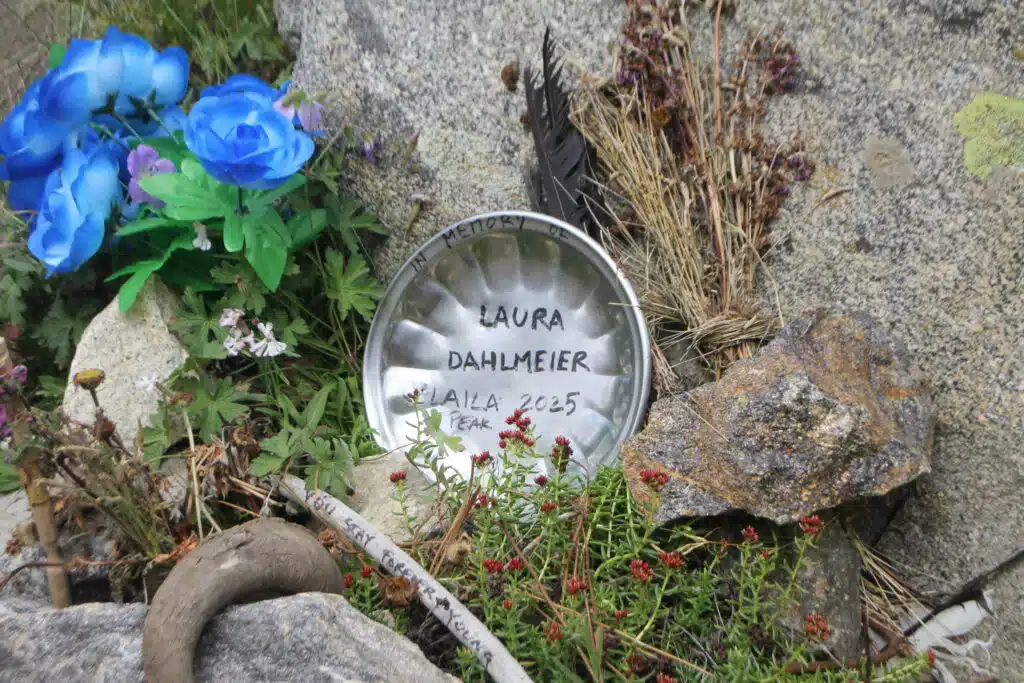
In 2025, Laura Dahlmeier died at around 5,700 meters after falling rock struck her. In 2016, Leonardo Comelli lost his life during a ski descent.
Temperature directly influences rockfall on Laila Peak. As sunlight warms the face, frozen rocks loosen and begin to fall, which forces climbers to carefully plan their movement and timing on the mountain. The safest strategy is to start climbing between 3 and 4 AM, when temperatures are low and rocks remain frozen, and to descend before midday warming begins.
This hazard plays a major role in shaping perceptions of the Laila Peak death rate, often more than falls or avalanches.
Secondary Danger: Soft Snow
Another key factor is snow condition.
Unlike some other mountain ranges, the Karakoram often experiences snow that does not freeze completely overnight, especially during July and August.
Climbing steep slopes of 45–55° in soft snow significantly increases effort and risk. Poor snow consolidation reduces crampon grip and makes each step unstable, increasing the chance of a fall.
A practical rule followed by experienced climbers is to assess snow conditions early. If the snow has not firmed up by around 6 AM at the base of the face, it is usually safer to turn back and wait for better conditions.
Laila Peak vs Other Karakoram Peaks
To better understand Laila Peak difficulty, it helps to compare it with other peaks in the region.
Laila Peak, at just over 6,000 meters, is technically more demanding than many higher mountains. Peaks like Spantik or Diran may be taller, but they often have more accessible routes and some level of commercial support.
Climbers often use Gondogoro Peak for acclimatization because it is non-technical, while K6 West represents a much higher level of extreme difficulty. Laila Peak sits in a unique position—moderate in height but highly demanding in technique and commitment.
Who Should Attempt Laila Peak?
Laila Peak is suitable only for climbers with solid alpine experience.
Alpinists who have already completed multiple technical climbs at high altitude and are comfortable on sustained steep ice and snow should attempt it.
It is not appropriate for trekking peak climbers or those without prior experience in technical mountaineering at altitude.
As a minimum benchmark, climbers should have completed at least two technical peaks above 5,000 meters and be confident in decision-making under challenging conditions.
Experienced Alpinist Ready for Laila Peak?
If you have the technical climbing and high-altitude experience required for Laila Peak, talk to our local team about expedition planning, route logistics, permits, camps, and on-ground mountain support.
Final Thoughts on Laila Peak Difficulty
Laila Peak is a mountain where visual beauty can be misleading. Its clean lines and elegant shape hide a serious and committing climb.
The combination of continuous steep terrain, extremely low summit success, and objective dangers like rockfall make it one of the most demanding peaks in the Karakoram.
Understanding the true Laila Peak difficulty, choosing the right route, and respecting the realities behind the limited Laila Peak summit history are essential for anyone considering this climb.
If you are looking to attempt Laila Peak or explore the Karakoram with a team that understands the terrain, logistics, and risks, Skardu Trekkers offers experienced guides, proper expedition planning, and reliable on-ground support. Whether your goal is acclimatization, technical climbing, or simply reaching basecamp, planning with the right team can make a critical difference in both safety and success.





Comments are closed