


Laila Peak Ski Descent: Complete History, Routes and What Makes It One of the World’s Most Extreme Runs
Laila Peak rises to 6,096 meters (20,000 feet) in the Hushe Valley, Karakoram Range, Pakistan. It looks like a needle pointing straight into the sky. Its northwest face drops at 45 degrees for over 1,500 vertical meters one continuous, sustained, mixed rock-and-ice wall.
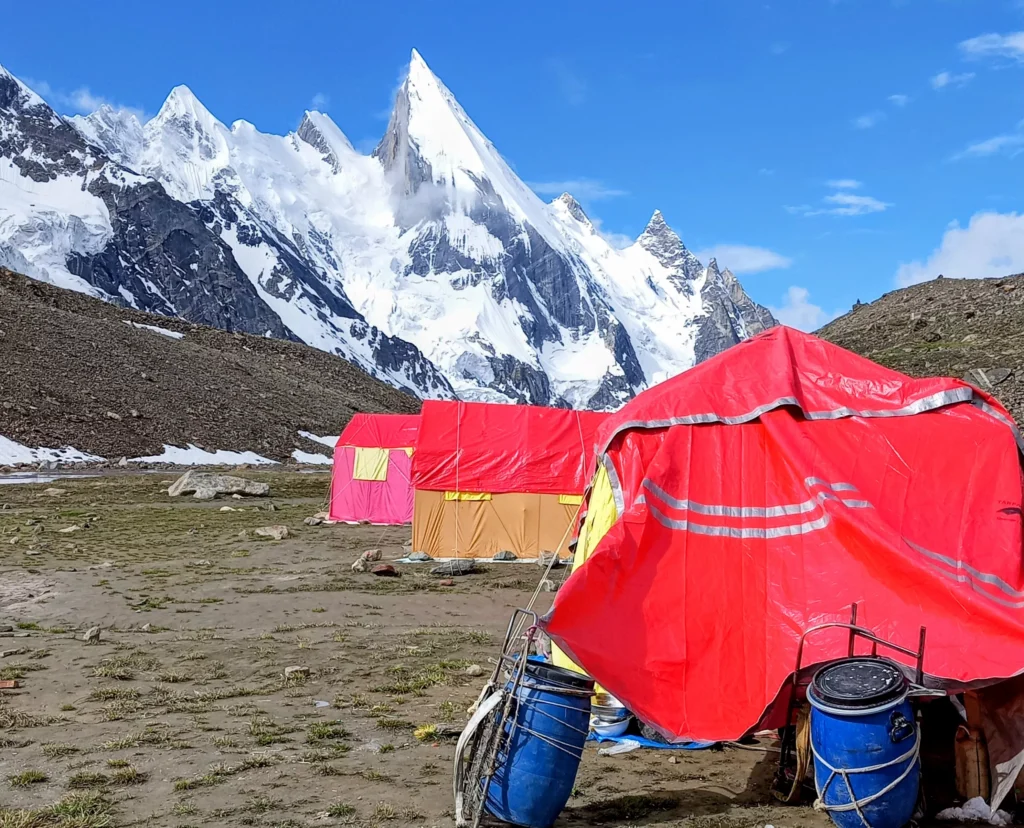
Skiers have tried to descend that face since 2005. It took 13 years and one fatal accident before anyone skied it from the true summit. In 2021, Andrzej Bargiel the first man to ski K2 added his name to the mountain’s history too.
This is the full story of the Laila Peak ski descent: every attempt, the routes used, and what it actually takes to ski this mountain.
What Makes Laila Peak One of the World’s Hardest Ski Descents?
The northwest face of Laila Peak holds a sustained 45-degree pitch for more than 1,500 meters, with sections steepening to 55 degrees near the top. That is the core of the problem. There is no easy section to recover on.
| Factor | Why It Matters |
| Sustained 45° (up to 55°) face | Over 1,500 vertical meters with almost no flat rest one mistake compounds fast. |
| Mixed rock and ice | The face is not pure snow. Skiers cross rock bands and ice sections where a fall does not stop on snow. |
| Rockfall hazard | Loose rock releases as temperatures rise during the day timing the descent matters. |
| Unfrozen overnight snow | Unlike many high-altitude faces, Laila’s snow often does not refreeze solid overnight, leaving unstable surface layers. |
| Remote location | Hushe Valley access via Gondogoro Glacier. Help is days away. A serious injury here is very difficult to survive. |
For scale, compare it to two other extreme descents. Andrzej Bargiel’s 2018 K2 descent dropped from 8,611 meters but followed a combination of established climbing routes the Cesen Route, the Messner Traverse, and the Kukuczka-Piotrowski line covering roughly 3,400 vertical meters to the glacier below.
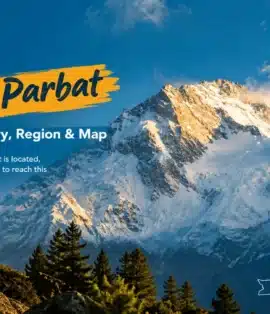
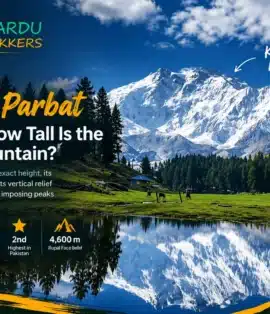
The Rupal Face on Nanga Parbat is even bigger over 4,000 meters of vertical relief, the tallest mountain face on Earth. Laila Peak is shorter than both. But its face is steeper, more sustained, and offers fewer options if conditions turn bad. Size is not the same as difficulty. On Laila, there is nowhere to hide.
Laila Peak Ski History Chronological
2005 — The First Attempt
Fredrik Ericsson and Jörgen Aamot, two Scandinavian extreme skiers, made the first serious attempt on Laila Peak’s northwest face in 2005. They climbed to within about 100 meters of the summit before icy conditions stopped them.
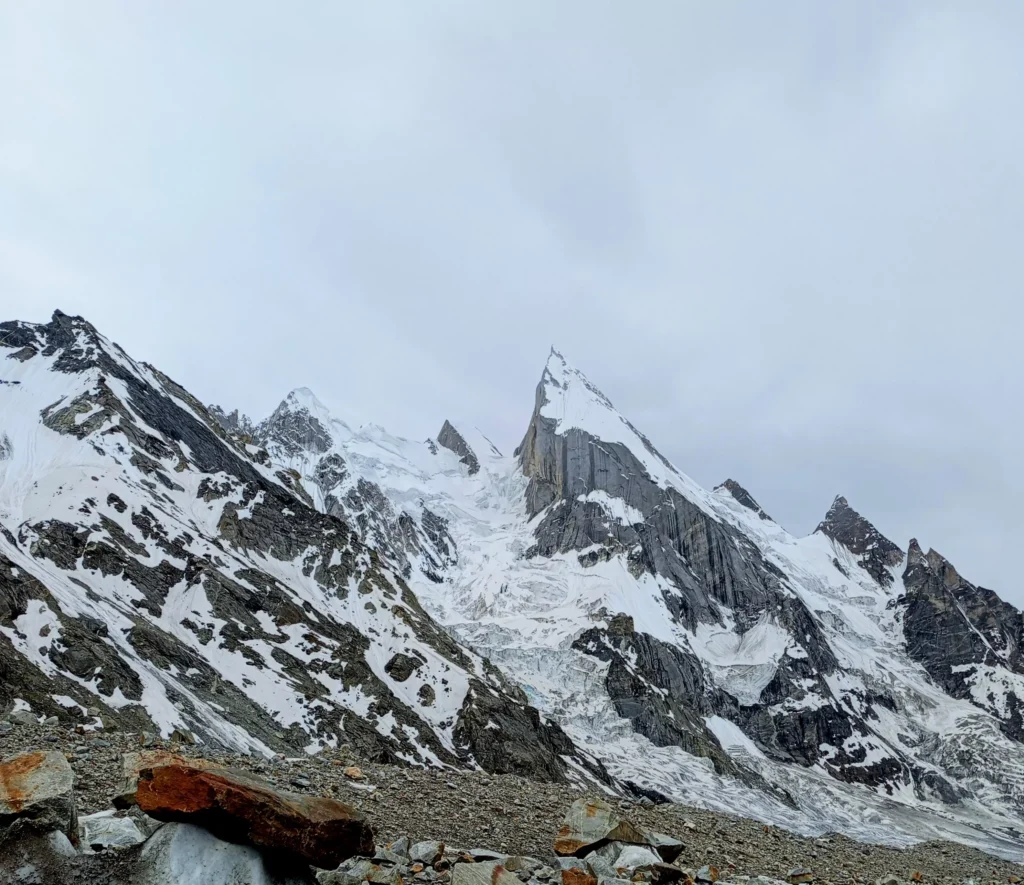
They turned around and skied down the northwest face toward the Gondogoro Glacier anyway the first time anyone had skied any part of the mountain. Ericsson later described Laila as one of the most striking mountains he had ever seen, calling it a needle pointing straight into the sky.
2016 — The First Ski Death
An Italian team of four Zeno Cecon, Carlo Cosi, Enrico Mosetti, and Leonardo Comelli reached about 150 meters below the summit before deep snow forced them to turn back. All four decided to ski the northwest face from that point.
During the descent, at around 5,350 meters, 27-year-old Comelli crossed his skis on a traverse, lost his balance, and fell approximately 400 meters to his death. It was the first ski-related fatality on Laila Peak, and it underlined exactly how unforgiving the face is.
2018 — The First Complete Ski Descent
On May 11, 2018, French skiers Carole Chambaret, Tiphaine Duperier, and Boris Langenstein became the first team to ski Laila Peak from the true summit. They climbed for 12 hours straight in good weather and skied roughly 1,800 meters of fresh snow down the northwest face.
A few days later, a second team Italian-Swiss skiers Cala Cimenti and Matthias Koenig repeated the descent. After 13 years of failed attempts and one fatal accident, the mountain had finally been skied from top to bottom, twice in the same season.
2021 — Andrzej Bargiel’s Ski Descent
On May 10, 2021, Polish ski mountaineer Andrzej Bargiel and his partner Jędrzej Baranowski left their advanced camp at 4:30 a.m. They reached the summit of Laila Peak at around 1 p.m.
Conditions near the top were too difficult to ski safely, so they left their skis about 150 meters below the summit, climbed to the top without them, then returned to the gear stash. From there, they skied the northwest face to their camp at 4,400 meters on the East Gondogoro Glacier covering the descent in just 2.5 hours.
The Laila Peak climb and ski was the second goal of Bargiel’s 2021 Karakoram Ski Expedition. Ten days earlier, the same pair had completed the first ascent and first ski descent of nearby Yawash Sar II (6,178 meters).
Andrzej Bargiel’s 2021 Laila Peak Ski
By 2021, Andrzej Bargiel was already the most recognized name in high-altitude ski mountaineering. In July 2018, he had become the first person to ski K2 descending from 8,611 meters to base camp without ever taking off his skis. That achievement earned him National Geographic’s Adventurer of the Year award for 2019.
In 2021, Bargiel launched the Karakoram Ski Expedition with one goal: climb and ski two unskied six-thousand-meter peaks in the same season, without supplemental oxygen. The first was Yawash Sar II (6,178 meters), climbed and skied via its west face. The second was Laila Peak.
The Climb
Bargiel and Baranowski left their camp at 4:30 a.m. on May 10, 2021. The route climbed approximately 1,800 vertical meters to the summit. They reached the top of Laila Peak described by Bargiel as a “needle in the sky” at around 1 p.m.
Leaving the Skis Behind
The final stretch below the summit was too technical and icy to ski safely. Rather than risk it, the pair stashed their skis about 150 meters below the top, climbed to the summit on foot, then returned to collect their gear.
This is a detail worth noting. Even one of the most accomplished ski mountaineers in the world chose not to ski the final section in those conditions. On Laila Peak, that decision is not unusual it is the same decision Ericsson and Aamot made in 2005, and the same line where the 2016 Italian team turned back.
The Descent
From their gear stash, Bargiel and Baranowski skied the northwest face down to their camp at 4,400 meters above the East Gondogoro Glacier. The descent took 2.5 hours.
Afterward, Bargiel summed up the mountain in a short statement that has been quoted across mountaineering media since: “The mountain is exceptional, and even though we did not manage to get down from the very top, it was a piece of skiing adventure for both of us.”
The Standard Ski Route Today
Most ski expeditions on Laila Peak today approach via the west col a route first established by an Italian team in 1996. The approach runs up the Gondogoro Glacier to the upper west col, then traverses onto the northwest face for the ski descent.
| Route Element | Details |
| Approach | Gondogoro Glacier to upper west col (1996 Italian route) |
| Ski line | Northwest face sustained 45° to 55°, 1,500+ vertical meters |
| 2018 French/Italian teams | Both accessed via the upper west col before skiing the NW face |
| 2021 Bargiel/Baranowski | Used East Gondogoro Glacier approach, camp at 4,400 m |
| Best access valley | Hushe Valley, Gilgit-Baltistan |
Teams accessing from either the lower or upper west col side of the mountain generally find the approach easier and objectively safer than direct routes up the northwest face itself. The 2018 French and Italian-Swiss teams both used this approach before dropping onto the ski line. Bargiel and Baranowski’s 2021 route, by contrast, came in from the East Gondogoro Glacier side.
Is a Laila Peak Ski Descent Right for You?
Short answer: for almost everyone, no. This is not recreational skiing, and it is not a step up from advanced backcountry skiing. Laila Peak sits in a different category entirely.
| Requirement | Why It’s Necessary |
| Expert off-piste skiing at 45°+ on ice | The face does not offer soft, forgiving snow. Edge control on hard, icy terrain is mandatory. |
| Ice axe self-arrest proficiency | Sections of the descent may require switching between skis and mountaineering technique. |
| Crampon proficiency at altitude | The approach and summit ridge involve climbing on crampons above 5,500 meters. |
| Bivouac experience | Weather windows are short. Teams must be prepared to wait out conditions in exposed camps. |
| Prior experience above 5,000 meters | Altitude affects judgment and physical capacity. This cannot be learned on the mountain itself. |
For context: only a handful of people have ever skied Laila Peak’s northwest face from the true summit. Three of them did it in 2018. Bargiel one of the most decorated ski mountaineers alive, with a first ski descent of K2 to his name chose not to ski the final 150 meters in 2021.
If you are weighing this against other extreme ski benchmarks the Rupal Face on Nanga Parbat, the Lhotse Couloir, or Bargiel’s own K2 line Laila Peak belongs in the same conversation. It is shorter than those descents, but the sustained steepness and the mixed rock-and-ice terrain put it firmly in expert-only territory.
Planning a Laila Peak Ski Expedition
The best window for skiing Laila Peak is May or early June. Snow is firmest during this period, which matters on a face this steep soft, wet snow on a 45-degree slope increases avalanche risk significantly.
| Season Factor | Details |
| May | Best window firmest snow conditions for the NW face |
| Early June | Still viable snow conditions begin softening |
| July–August | Not recommended for skiing snow becomes too soft and wet |
| Access valley | Hushe Valley, Gilgit-Baltistan |
| Logistics base | Same access points used for Laila Peak climbing expeditions |
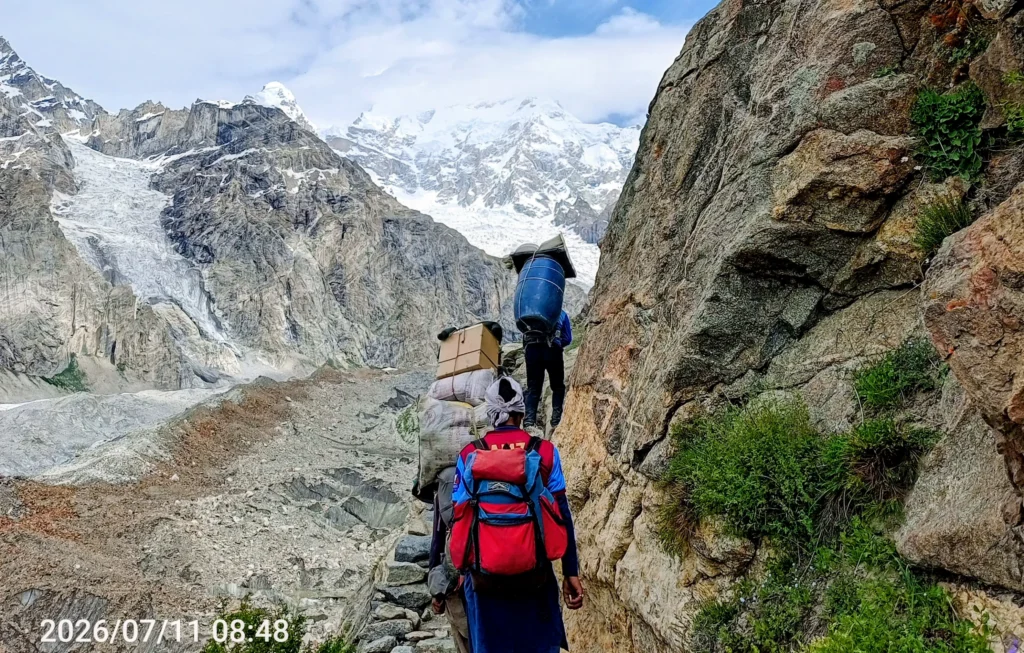
Logistics for a ski expedition follow the same path as a climbing expedition to Laila Peak road access through Hushe Valley, porter support to base camp, and permits arranged through a licensed local operator.
Laila Peak’s history is short but intense one first attempt, one death, one historic first descent, and one of the world’s best ski mountaineers choosing caution over completion. For most visitors, the real draw is simpler: standing in the Hushe Valley and looking up at this 6,096-meter spear of rock and ice is an experience on its own, no skis required.
Plan Your Laila Peak Expedition with Skardu Trekkers
Whether you’re planning a Laila Peak climbing expedition, a base camp trek to witness this needle-shaped peak up close, or researching the route for a future ski mission Skardu Trekkers handles the logistics in the Hushe Valley.
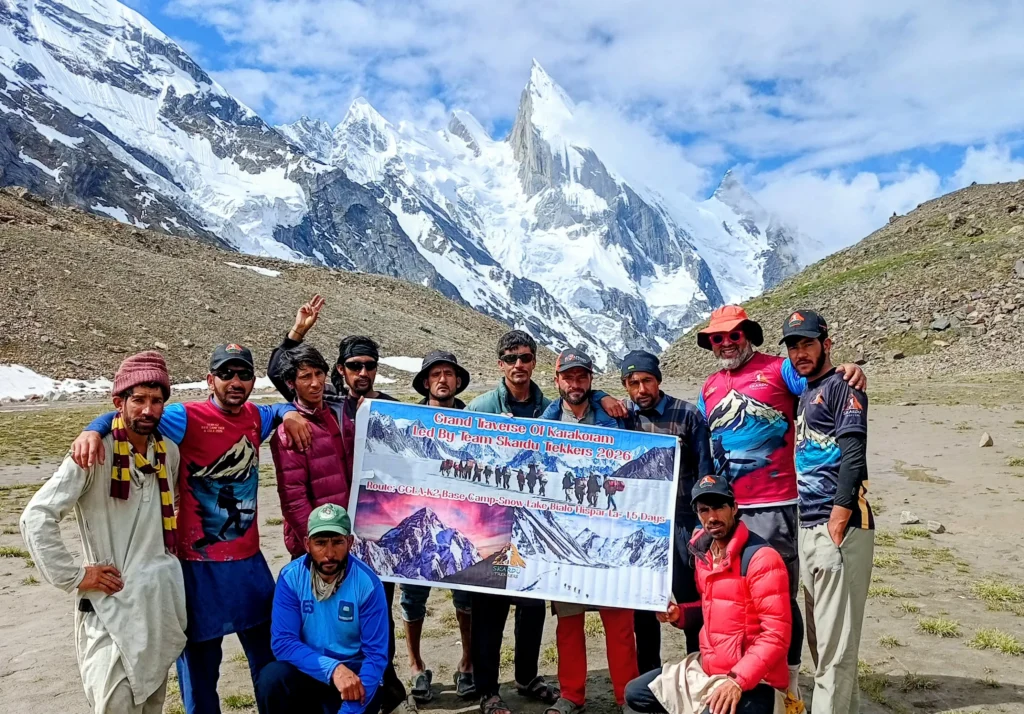
We are a licensed Pakistan trekking and expedition company (License No: DTS-GB-046) based in Gilgit-Baltistan, with direct experience supporting teams in the Hushe Valley and East Gondogoro Glacier area.
📍 Laila Peak Expedition
📍 Laila Peak Base Camp Trek
📍 Laila Peak Route & Summit Guide
📧 info@skardutrekkers.com | 📞 +92 355 4454 205



Comments are closed