

Gondogoro La: Height, Trek, Difficulty & Complete Crossing Guide
Gondogoro La is a high-altitude mountain pass in the Karakoram Range of Gilgit-Baltistan, Pakistan. It stands at 5,585 meters (18,323 feet) and connects the Baltoro Glacier to the Hushe Valley. It is one of the most demanding and rewarding trekking passes in the world.
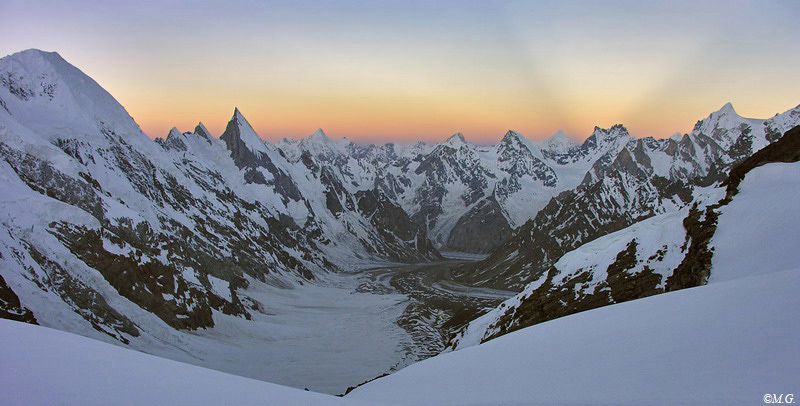
Most trekkers cross Gondogoro La as the final leg of the K2 Base Camp and Gondogoro La Trek. The pass offers direct views of K2, Broad Peak, and the Gasherbrum massif from its summit.
What Is Gondogoro La and Where Is It Located?
Gondogoro La is a mountain pass not a mountain or a peak. It sits at 5,585 meters (18,323 feet) above sea level in the Karakoram Range, Gilgit-Baltistan, Pakistan.
The pass connects Concordia at the head of the Baltoro Glacier to the Hushe Valley. It serves as the classic exit route from the K2 Base Camp trek circuit. The nearest major town is Skardu, which acts as the gateway to the entire region.
Key location facts:
- Range: Karakoram, Pakistan
- Province: Gilgit-Baltistan
- Elevation: 5,585 meters (18,323 feet)
- Connects: Concordia (Baltoro Glacier) ↔ Hushe Valley
- Gateway city: Skardu
- Trek start: Askole village
How High Is Gondogoro La Pass?
Gondogoro La stands at 5,585 meters (18,323 feet) above sea level. This makes it one of the highest trekking passes in the Karakoram Range.
At the summit, temperatures can drop to -10°C or lower at night, even in summer. Wind speeds increase significantly above 5,000 meters. Altitude sickness becomes a serious risk above 4,000 meters during the ascent.
| Elevation Comparison | Meters | Feet |
| Gondogoro La Pass | 5,585 m | 18,323 ft |
| Concordia Camp | ~4,600 m | ~15,091 ft |
| K2 Base Camp | 5,150 m | 16,896 ft |
| Skardu (gateway) | ~2,226 m | ~7,303 ft |
Snow can occur at any time of year above 4,000 meters on the approach. The pass itself holds snow year-round.
What Is the Gondogoro La Trek Route?
The Gondogoro La trek route starts from Askole and follows the Baltoro Glacier toward Concordia and K2 Base Camp. The Gondogoro La pass crossing is the final high-altitude section before descending to Hushe Valley.
Standard route overview:
- Skardu → Askole (jeep, ~8–9 hours)
- Askole → Jhola → Paiyu (3–4 days)
- Paiyu → Urdukas → Goro II (2–3 days)
- Goro II → Concordia (1–2 days)
- Concordia → K2 Base Camp (day trek or overnight)
- Concordia → Gondogoro Base Camp (1 day)
- Gondogoro Base Camp → Gondogoro La summit → Khuspang (crossing day)
- Khuspang → Saicho → Hushe (2 days)
- Hushe → Khaplu → Skardu (jeep)
The full K2 and Gondogoro La trek typically takes 20–22 days. Total trekking distance is approximately 160–170 km round trip including the approach and crossing.
The route passes under the faces of four 8,000-meter peaks: K2 (8,611 m), Broad Peak (8,051 m), Gasherbrum I (8,080 m), and Gasherbrum II (8,035 m). No other standard trekking route in the world offers this concentration of 8,000-meter summits.
For trekkers who want to experience K2 Base Camp without crossing the pass, the K2 Base Camp Trek follows the same route to Concordia and returns via the same Baltoro Glacier trail.
Ready to Cross Gondogoro La?
Take on the K2 Base Camp and Gondogoro La Trek with experienced local guides. We handle permits, logistics, accommodation, transport, and expedition support throughout the journey.
What Is the Gondogoro La Difficulty Level?
Gondogoro La difficulty is rated as highly technical for a trekking pass. It requires glacier travel skills, crampon use, fixed-rope technique, and strong physical fitness.
The crossing day involves:
- A 4 a.m. departure to reach the summit before afternoon conditions worsen
- A 700–800 meter elevation gain on the ascent day
- Steep glacier and ice sections requiring crampons
- Fixed rope sections on the most exposed pitches
- A technical descent into Hushe Valley on mixed terrain
This is not a standard high-altitude walk. Trekkers must be competent with crampons and ice axes. Prior high-altitude trekking experience above 4,000 meters is strongly recommended.
Difficulty factors summary:
| Factor | Rating |
| Technical skill required | High |
| Physical fitness required | Very High |
| Altitude (AMS risk) | Very High |
| Weather unpredictability | High |
| Route-finding complexity | Moderate–High |
| Crampon/rope use required | Yes |
Crossing Gondogoro La is not recommended for first-time high-altitude trekkers. A qualified guide and a competent team are essential.
How Difficult Is Crossing Gondogoro La Pass?
Crossing Gondogoro La requires glacier travel skills, crampon and fixed-rope technique, high-altitude fitness, and the ability to move efficiently on ice before conditions deteriorate.
The crossing window is narrow. Teams depart well before dawn typically between 2 a.m. and 4 a.m. to reach the pass by midday. Afternoon weather on the Karakoram passes changes rapidly. Teams that start late face significantly higher risk.
Key technical requirements:
- Crampons: mandatory on the upper glacier and summit slopes
- Ice axe: required on the ascent and upper descent
- Fixed ropes: typically installed on the steepest sections by guides
- Microspikes: insufficient for the upper sections full crampons required
- Helmet: strongly recommended for the rocky descent sections
The descent into Hushe Valley is steep and loose. Rock fall and ice debris are risks on this side. Speed and coordination are critical.
What Is the Best Time to Cross Gondogoro La?
The best time to cross Gondogoro La is between late June and early September. The trekking season for the Gondogoro La pass runs from June to September.
July and August offer the most stable weather windows. June can still carry heavy snow at altitude. September sees shorter windows and earlier onset of deteriorating conditions.
| Month | Conditions |
| June | Possible, high snow, variable weather |
| July | Best window, stable skies |
| August | Optimal, dry and clear |
| September | Possible, weather shortens |
| October–May | Closed, extreme conditions |
The Karakoram Range sits outside the main monsoon belt. It experiences relatively dry summers compared to other mountain regions. However, sudden storms, high winds, and snowfall occur at any time above 4,000 meters.
Trekkers should build 2–3 buffer days into the itinerary around the crossing day to account for weather delays.
What Gear Do You Need for the Gondogoro La Trek?
The Gondogoro La trek demands serious mountaineering equipment for the crossing day alongside standard long-distance trekking gear for the approach.
Crossing day essentials:
- Full crampons (10–12 point minimum)
- Ice axe
- Harness and locking carabiner for fixed ropes
- Helmet
- Warm insulation layer (temperatures below -10°C at summit)
- Goggles or glacier glasses (UV protection at altitude)
- Gaiters
Trekking approach essentials:
- Broken-in trekking boots with ankle support
- Down sleeping bag rated to -15°C
- Trekking poles (collapsible for crossing day)
- Layering system for 0°C to 30°C temperature range
- Sun protection (sunscreen SPF 50+, hat, UV gloves)
- Water purification tablets or filter
A note on microspikes vs crampons: microspikes are not sufficient for Gondogoro La. The upper glacier and fixed-rope sections require full-frame crampons with front points.
What Are the Main Safety Risks on the Gondogoro La Pass?
The Gondogoro La pass carries serious objective hazards. Trekkers must understand each risk before committing to the crossing.
Primary hazards:
Altitude Sickness (AMS/HACE/HAPE): The sustained elevation above 4,500 meters on approach and the 5,585-meter (18,323-foot) summit create serious AMS risk. Proper acclimatization is non-negotiable.
Sudden weather changes: Karakoram weather can shift from clear to whiteout within hours. Trekkers caught on the pass during a storm face extreme danger.
Crevasse risk: The approach glaciers contain hidden crevasses. Roped travel and experienced guides are essential.
Rock and ice fall: The descent into Hushe Valley passes below unstable slopes. Move fast through exposed sections.
Hypothermia: Temperatures drop sharply at the summit, especially in wind. Poor gear choices or slow movement increase this risk significantly.
Dehydration: High-altitude environments cause rapid dehydration. Drink 3–4 liters of water daily on the approach and crossing day.
Every group crossing the pass should carry a first aid kit with altitude medication (acetazolamide/Diamox) and have an emergency evacuation plan. Helicopter rescue is possible from Hushe and Concordia areas but is subject to weather.
Not Sure If You’re Ready for Gondogoro La?
Get expert advice on the route, required experience, equipment, acclimatization, and trekking itinerary before you commit to the crossing.
Is Gondogoro La in Pakistan?
YES, Gondogoro La is located in Gilgit-Baltistan, Pakistan, within the Karakoram Range.
Is Gondogoro La a Mountain?
NO , Gondogoro La is a high-altitude mountain pass in the Karakoram Range, not a mountain or peak.
Is Gondogoro La the Same as K2 Base Camp?
NO , Gondogoro La is a separate mountain pass at 5,585 meters (18,323 feet); K2 Base Camp sits at approximately 5,150 meters (16,896 feet) near the base of K2 itself.
Do You Need a Permit to Cross Gondogoro La?
YES, trekkers crossing Gondogoro La require a trekking permit from the relevant Pakistani authorities. Permits are arranged through licensed trekking operators in Skardu.
Can Beginners Trek to Gondogoro La?
NO, Gondogoro La requires prior high-altitude trekking experience, technical glacier skills, and strong physical fitness. First-time trekkers are not suitable candidates for the crossing without extensive preparation.
What Wildlife Exists in the Gondogoro La Region?
The Gondogoro La region supports significant biodiversity despite the extreme altitude and harsh conditions.
Mammals: Snow leopard (elusive, occasionally spotted), Himalayan ibex, Markhor. Both ibex and markhor are frequently seen grazing on high pastures during summer.
Birds: Golden eagle, various migratory species. The region draws birdwatchers due to its high-altitude avian diversity.
Vegetation: Alpine meadows at lower elevations with grasses, sedges, and wildflowers in summer. Higher zones support hardy shrubs and lichens. Several endemic plant species occur here.
Conservation pressure is increasing due to rising visitor numbers. Responsible trekking practices including proper waste management and avoidance of wildlife disturbance are essential for protecting this ecosystem.
What Is the Cultural Significance of Gondogoro La?
Gondogoro La lies within the territory of the Balti people of Gilgit-Baltistan. The Balti community carries a culture rooted in Tibetan heritage with influences from Islamic and Central Asian traditions.
The area around the pass is not just a trekking route. It connects communities on both sides of the Karakoram. Local festivals tied to seasonal changes, traditional music, and communal practices define life in the villages along the trek corridor particularly in the Hushe Valley.
Tourism has created economic opportunity in these communities. Porter and guide employment, tea house operations, and supply logistics provide income to local families. At the same time, rapid growth in visitor numbers raises concerns about cultural preservation and environmental sustainability.
Community-based tourism models in the Hushe Valley aim to keep economic benefits local while protecting cultural heritage.



Comments are closed