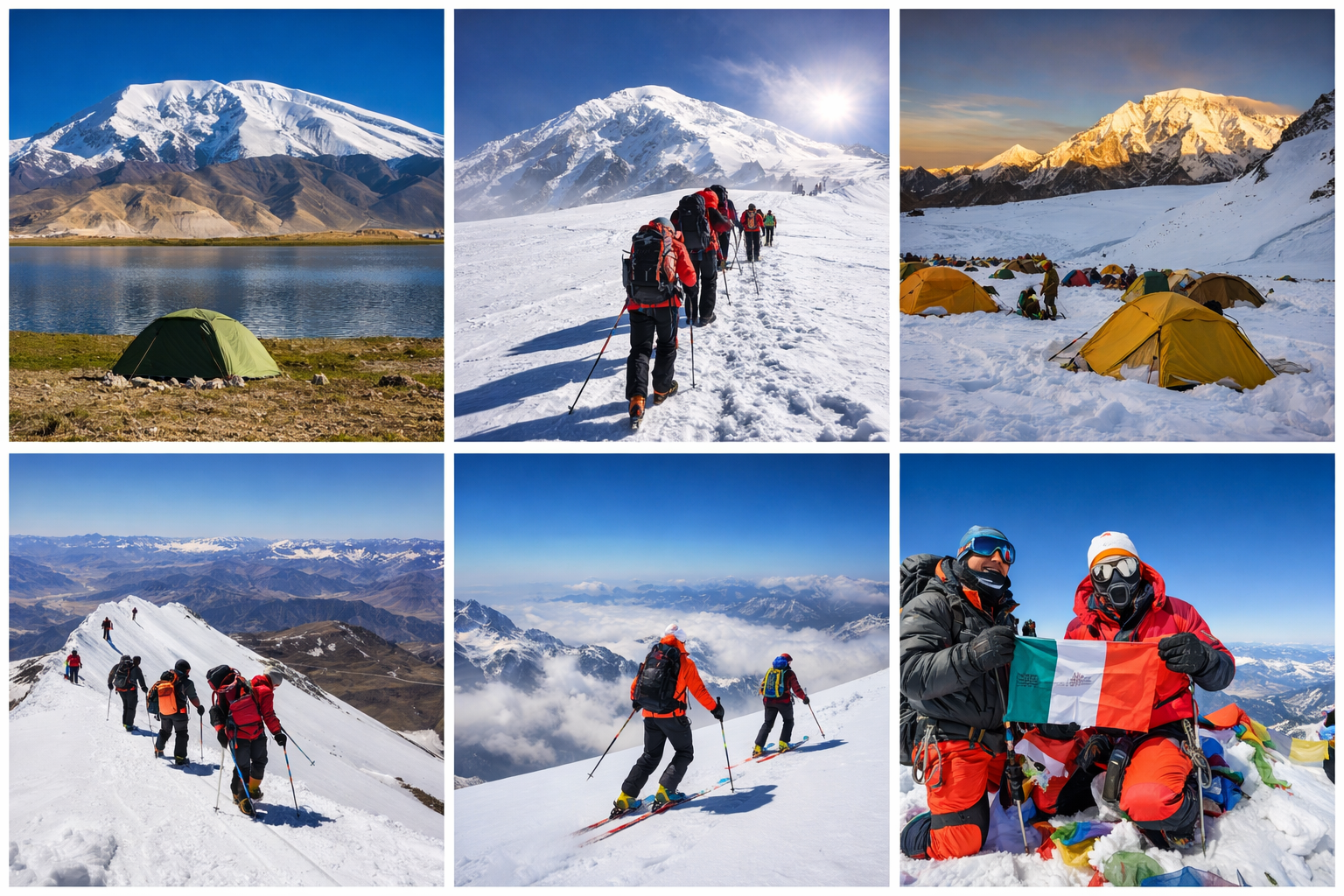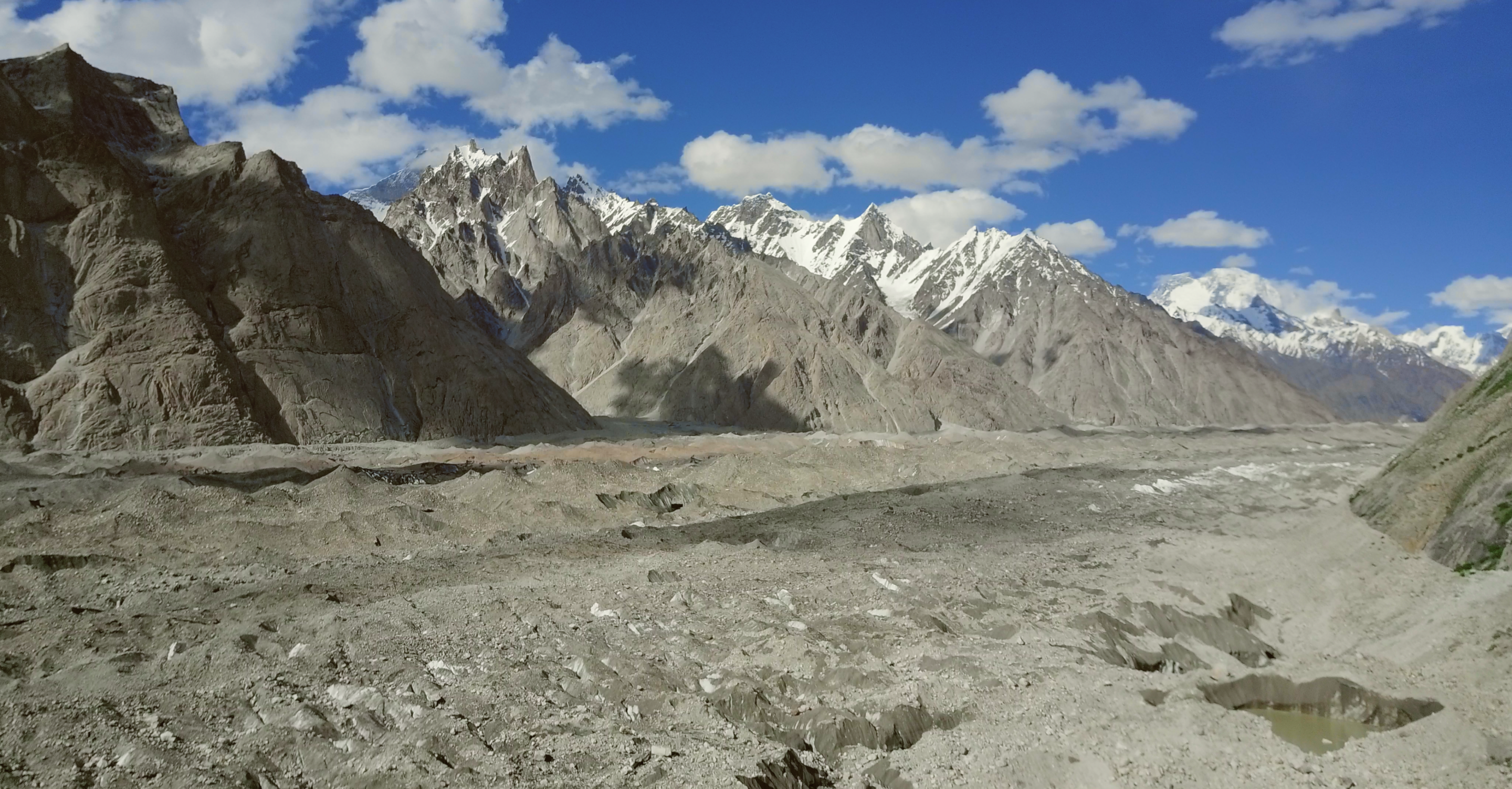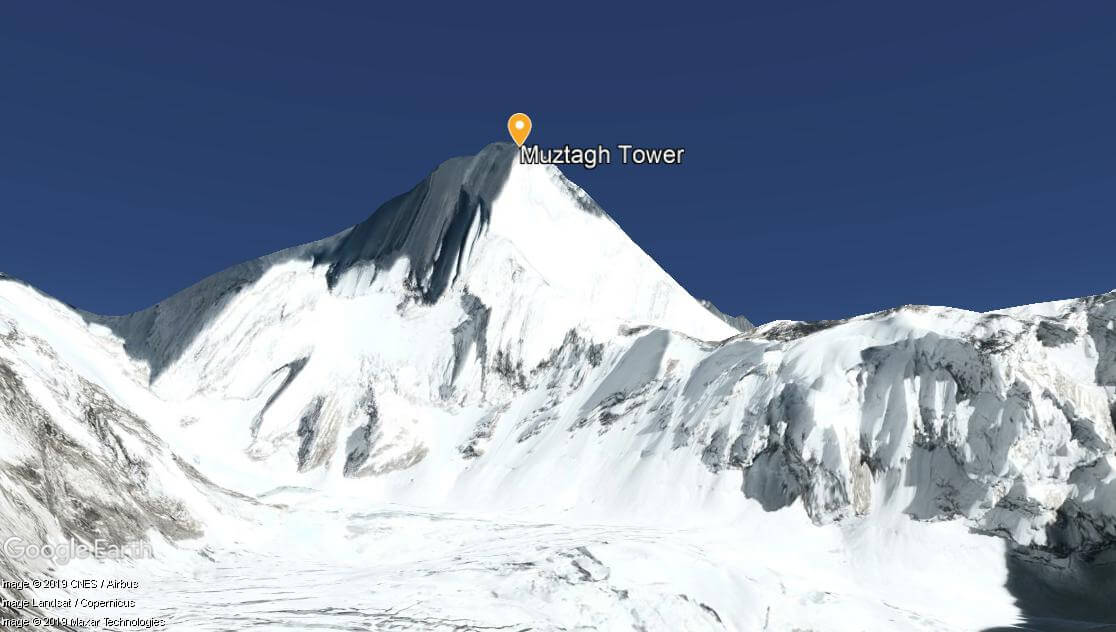
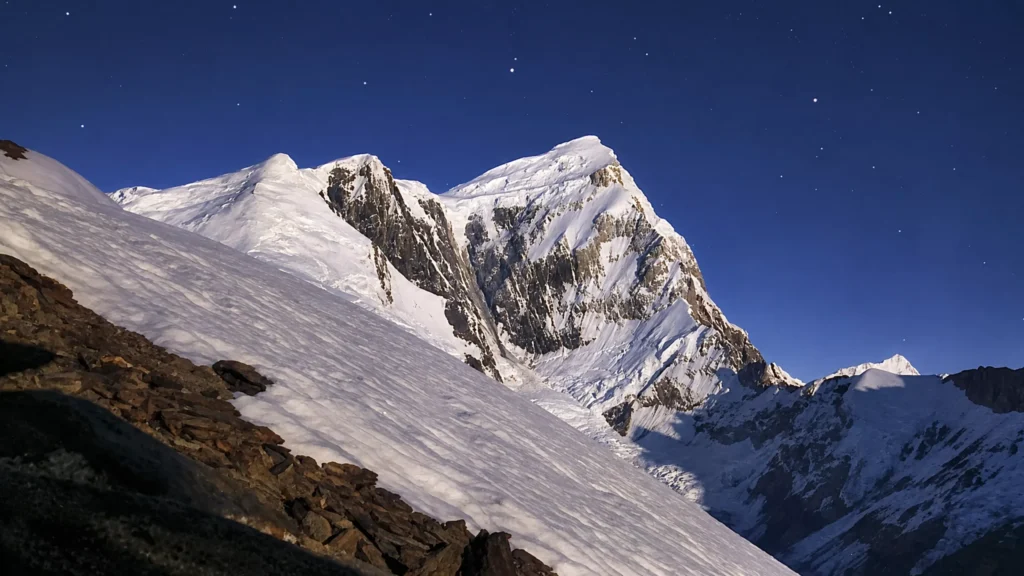
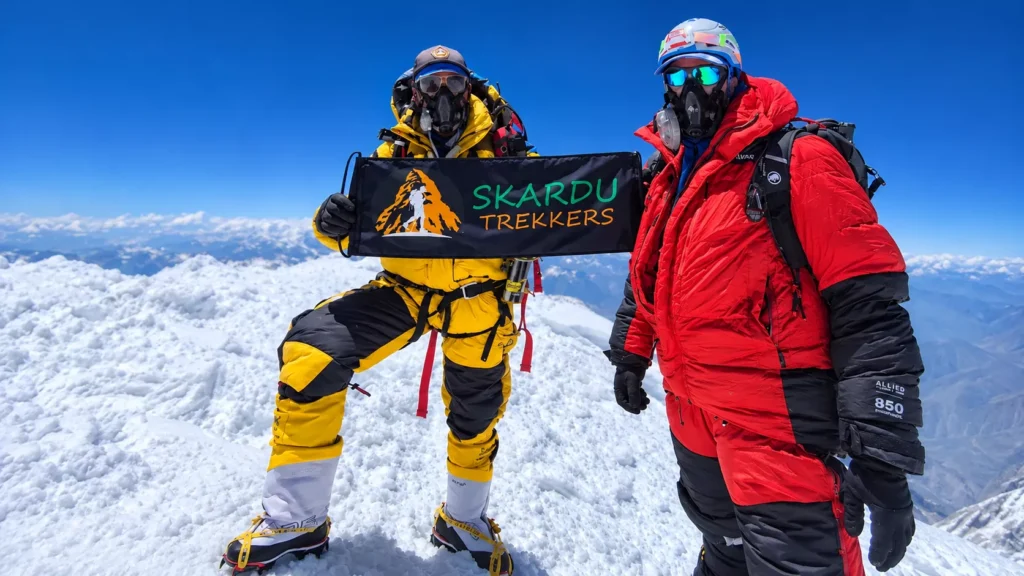
Spantik Peak overview
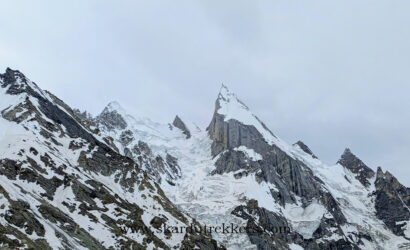
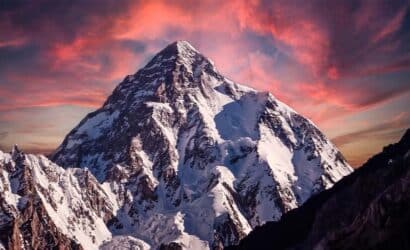
Spantik Peak, also known as the Golden Peak, stands at 7,027 metres (23,054 ft) in the Karakoram Range of Gilgit-Baltistan, Pakistan. It is considered one of the more accessible 7,000-metre peaks in the country. Moreover, its classic South-East Ridge offers an exciting introduction to high-altitude mountaineering.
Our Spantik Peak Expedition 2027 follows the Chogolungma Glacier and climbs the famous South-East Ridge towards the summit. Although this route involves less technical climbing than many other Karakoram peaks, it still requires excellent endurance, proper acclimatization, and previous mountaineering experience.
Therefore, Spantik is an excellent objective for climbers preparing for higher mountains such as Broad Peak and K2.
Join Skardu Trekkers, a licensed and locally operated trekking and expedition company in Baltistan, for a fully supported 29-day climbing adventure. With experienced high-altitude guides, reliable logistics, and a strong focus on safety, we help you explore the magnificent Karakoram mountains.
Spantik Peak Expedition 2027– Quick Facts
The Spantik Peak Expedition 2027 follows the classic South-East Ridge through the Chogolungma Glacier. During this 29-day journey, climbers experience glacier trekking, high-altitude camping, acclimatization, and an exciting summit attempt.
| Expedition Details | Information |
|---|---|
| Peak Name | Spantik (Golden Peak) |
| Elevation | 7,027 m (23,054 ft) |
| Mountain Range | Karakoram |
| Location | Shigar District, Gilgit-Baltistan, Pakistan |
| Normal Climbing Route | South-East Ridge |
| Glacier | Chogolungma Glacier |
| Starting Point | Arandu Village |
| Base Camp Elevation | Approximately 4,300 m |
| Expedition Duration | 29 Days |
| Best Climbing Season | June to August |
| Difficulty | Moderate to challenging high-altitude mountaineering |
| Ideal For | Experienced trekkers and aspiring 7,000-metre climbers |
Why Climb Spantik Peak with Skardu Trekkers?
Spantik offers a rewarding combination of high altitude, beautiful landscapes, and comparatively straightforward climbing. However, a successful expedition also depends on choosing the right local operator.
At Skardu Trekkers, we provide organized logistics, experienced climbing guides, and dedicated high-altitude support. Furthermore, our local knowledge helps us manage transportation, accommodation, permits, and expedition arrangements.
Here are some important reasons to choose our Spantik Peak Expedition 2027.
An Excellent First 7,000-Metre Peak
The South-East Ridge offers a comparatively straightforward climbing route for mountaineers attempting their first 7,000-metre summit. However, climbers still need suitable high-altitude experience and strong physical fitness.
Preparation for 8,000-Metre Peaks
Spantik provides valuable experience for mountaineers preparing for higher objectives. In particular, the expedition helps develop altitude awareness, endurance, and essential climbing skills before attempting Broad Peak, K2, or Nanga Parbat.
A Scenic Karakoram Route
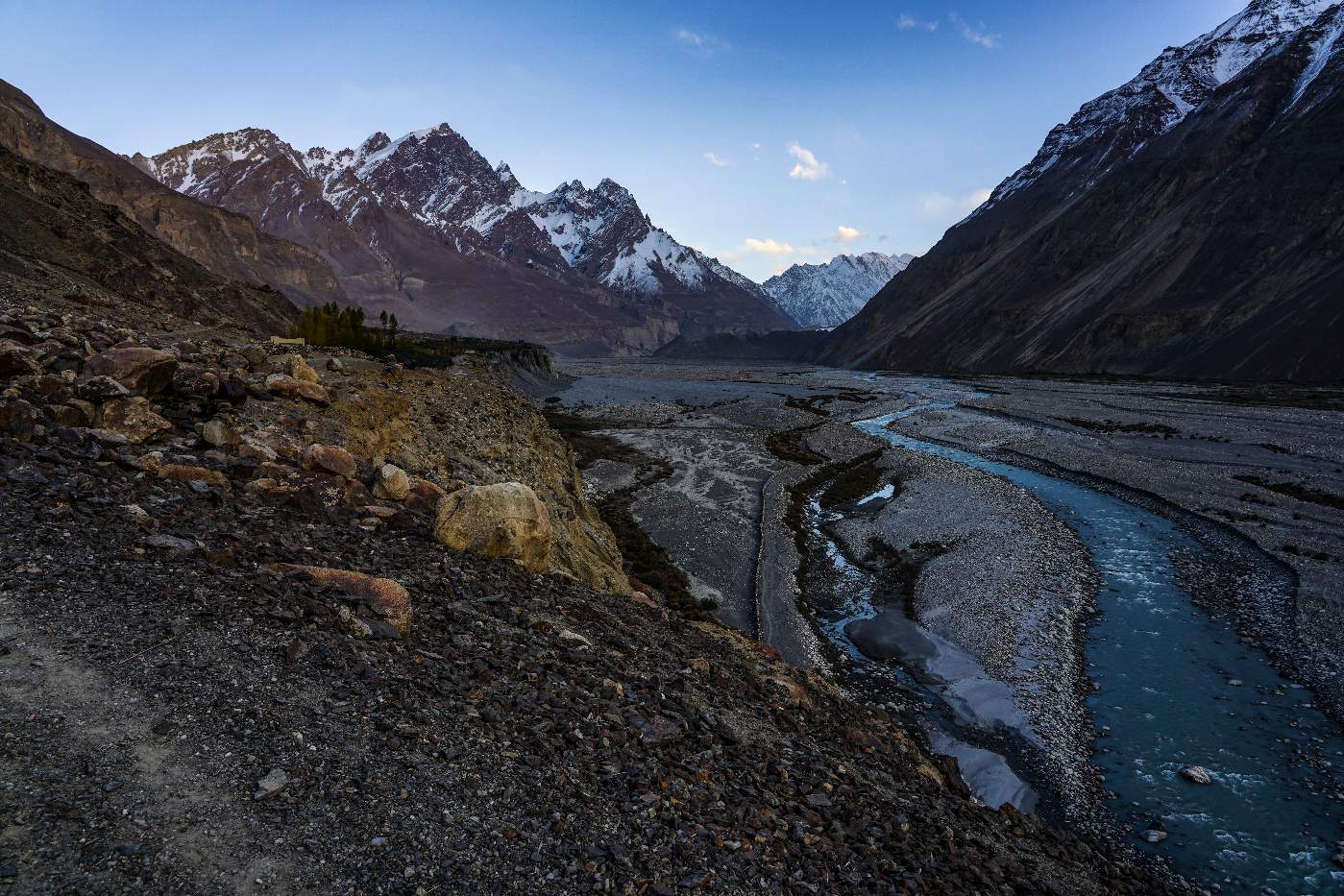
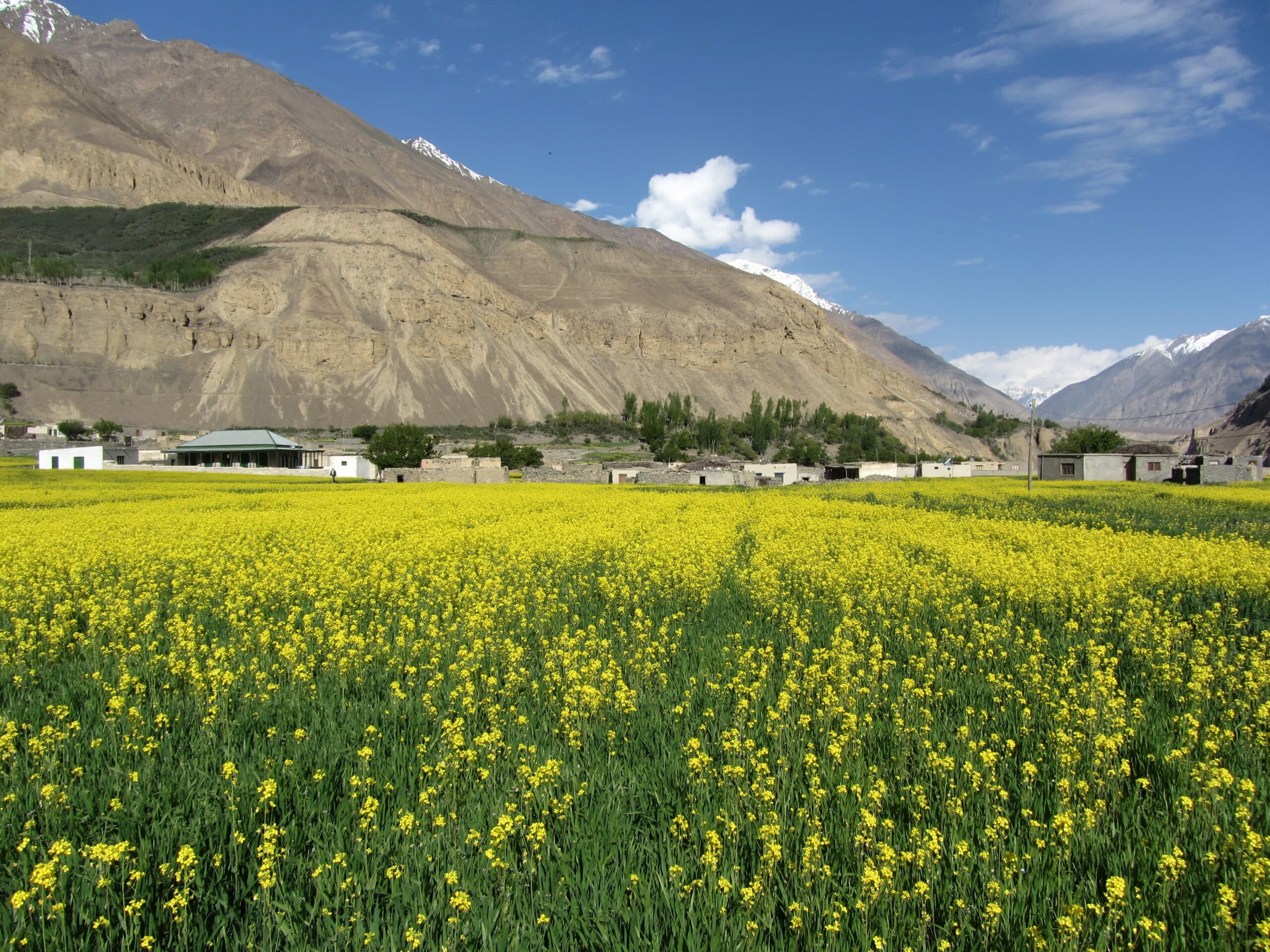
The journey begins in Arandu Village and continues towards the Chogolungma Glacier. Along the way, climbers enjoy beautiful valleys, mountain scenery, and a peaceful trekking environment.
Panoramic Summit Views
Reaching the summit rewards climbers with magnificent views of the surrounding Karakoram mountains. On a clear day, you may see Rakaposhi, Nanga Parbat, Diran, Malubiting, and Haramosh.
Experienced Local Expedition Team
Our expedition includes experienced high-altitude guides and High Altitude Porters (HAPs). In addition, our support staff manages essential camp arrangements and daily expedition operations.
Safety-Focused Expedition Logistics
Safety remains an important part of our climbing arrangements. Therefore, we prioritize acclimatization, weather assessments, communication, and responsible summit decisions. We also carry a satellite phone for emergency communication.
Spantik Peak Overview
Spantik stands between the Nagar (Hopar) Valley and Arandu in the Karakoram Range of Gilgit-Baltistan. Although climbers can approach the mountain from different directions, most expeditions follow the classic South-East Ridge from Arandu Village.
First, the journey takes climbers from Skardu to Arandu. From there, they trek along the beautiful Chogolungma Glacier towards Base Camp, which sits at approximately 4,300 metres.
The Chogolungma Glacier is an important part of the normal climbing route. However, climbers should not confuse it with the neighbouring Hispar Glacier. Spantik rises above the upper Chogolungma Glacier, south of the great Hispar Glacier.
Why Is Spantik Called the Golden Peak?
Spantik has several names, each with an interesting story. Its Burushaski name, Ghenish Chhish, means Golden Peak. Similarly, its famous English nickname comes from a distinctive marble formation known as the Golden Pillar.
This creamy marble pillar stands on the mountain’s north-west face. During sunset, it reflects the evening sunlight and creates a beautiful golden appearance against the surrounding mountains.
Furthermore, explorer W. M. Conway called the mountain Golden Parri, meaning the Golden Fairy, during his 1892 exploration.
The name Spantik itself comes from the Balti words spang (grass) and tik (place). According to the traditional explanation, the name refers to a grassy slope on the mountain’s south-east spur.
Spantik Peak Expedition 2027 Cost and Packages
At Skardu Trekkers, we offer private and customized Spantik Peak Expedition packages for individual climbers, families, groups, and international mountaineering companies.
Moreover, private expeditions provide greater flexibility. Climbers can plan their journey according to their schedules, preferences, and requirements. We also offer special group rates for larger teams.
Private Spantik Peak Expedition 2027 Cost
The Spantik Peak Expedition cost depends on your group size, travel arrangements, and selected services. Therefore, we offer different package options to accommodate various budgets and expedition requirements.
| Group Size | Cost Per Person |
|---|---|
| Solo | $6,000 |
| 2–4 Persons | $4,000 |
| 4–8 Persons | $3,200 |
| More than 8 Persons | $2,500 |
Spantik Expedition Cost for Pakistani Climbers
We also arrange customized Spantik Peak expeditions for Pakistani nationals. These packages are available for solo climbers, private groups, and larger teams.
| Group Size | Cost Per Person |
|---|---|
| Solo | 1,650,000 PKR |
| 2 Persons | 1,100,000 PKR |
| 4 Persons | 900,000 PKR |
| More than 4 Persons | 700,000 PKR |
Contact our team for the latest package details, service inclusions, and customized group rates.
Other Mountaineering Expeditions in Pakistan
Besides Spantik Peak, Skardu Trekkers organizes several exciting mountaineering expeditions across the Karakoram Range. These climbs offer different levels of altitude, difficulty, and mountaineering experience.
| Expedition | Elevation | USD | EUR |
|---|---|---|---|
| Spantik Peak | 7,027 m | $6,000 | €5,450 |
| Laila Peak | 6,096 m | $4,200 | €3,800 |
| Khosar Gang | 6,050 m | $2,300 | €2,000 |
| Pastore Peak | 6,210 m | $4,200 | €3,900 |
| Trango Tower | 6,286 m | $3,450 | €3,100 |
Prices may vary depending on group size, expedition arrangements, and individual requirements.
The Two Faces of Spantik: South-East Ridge and Golden Pillar
Spantik features two very different climbing routes. Therefore, understanding their differences is important before planning your expedition.
1. South-East Ridge – The Normal Climbing Route
The South-East Ridge is the standard route used by most Spantik expeditions, including our guided climb.
The climb starts from Base Camp on the Chogolungma Glacier. From there, the ridge gains approximately 2,700 metres over a distance of around 8 kilometres.
Most sections remain below 30 degrees. However, some steeper sections reach approximately 40 degrees.
Consequently, climbers need considerable physical endurance and glacier-travel skills. Nevertheless, this route involves less technical climbing than many other major Karakoram routes.
2. Golden Pillar – The North-West Face
The Golden Pillar presents a completely different mountaineering challenge. This impressive marble formation on Spantik’s north-west face is famous among technical alpinists.
British climbers Mick Fowler and Victor Saunders completed its first ascent in 1987. Their remarkable achievement became one of the celebrated technical climbs in the Karakoram. Furthermore, the route was not repeated until 2000.
Unlike the normal South-East Ridge, the Golden Pillar requires advanced technical climbing skills and extensive alpine experience.
Important: Our Spantik Peak Expedition follows the South-East Ridge, not the technical Golden Pillar route.
A Short History of Spantik Peak
The history of Spantik mountaineering dates back to the early twentieth century. Several explorers attempted to reach its summit before the first successful ascent.
In 1906, American explorers Fanny Bullock Workman and Dr. William Hunter Workman made an important attempt to climb the mountain. They followed the Chogolungma Glacier and reached a point approximately 300 metres below the summit.
At the time, their achievement represented a remarkable high-altitude record for a woman.
Their climbing high point remained unbeaten for almost half a century. However, in 1955, a West German expedition successfully completed the first ascent of Spantik.
Reiner Diepen, Eduard Reinhardt, and Jochen Tietze reached the summit via the Chogolungma Glacier and South-East Ridge. Today, this historic route remains the standard approach for climbers attempting the Golden Peak.
Challenges and Preparation for the Spantik Expedition
Although Spantik is considered one of the less technical 7,000-metre peaks in Pakistan, climbers should never underestimate its challenges. At 7,027 metres, the mountain exposes climbers to extreme altitude, unpredictable weather, and demanding glacier conditions.
Key Challenges of Climbing Spantik
High Altitude: The summit exceeds 7,000 metres. Therefore, climbers need proper acclimatization to reduce altitude-related risks.
Physical Endurance: The long South-East Ridge requires sustained effort over several days. Climbers must be comfortable moving across snow and glacier terrain.
Unpredictable Weather: Karakoram weather can change rapidly. As a result, storms may delay summit attempts or shorten suitable weather windows.
Glacier Travel: Climbers must understand roped glacier movement, crampon techniques, ice axe use, and basic crevasse-rescue procedures.
How to Prepare for Spantik Peak
Proper preparation improves your ability to manage the physical and technical demands of the expedition. We recommend following these steps before departure:
- Begin cardiovascular and strength training at least 6–8 weeks before departure.
- Practice hiking with a loaded backpack to build endurance.
- Develop confidence using crampons and an ice axe.
- Learn basic glacier-travel and rope techniques.
- Gain previous trekking or mountaineering experience at 5,000–6,000 metres, if possible.
- Consult a qualified high-altitude medical professional before departure.
- Arrange appropriate mountaineering and emergency evacuation insurance.
Most importantly, arrive physically prepared and follow your expedition leader’s acclimatization advice throughout the climb.
Best Time to Climb Spantik Peak
The best time to plan your Spantik Peak Expedition 2027 is between June and August. These months fall within the main climbing season in the Karakoram.
July and August usually provide suitable opportunities for high-altitude climbing and summit attempts. However, actual conditions depend on weather patterns, snowfall, and mountain conditions.
Therefore, climbers should maintain a flexible schedule. Allowing additional days for acclimatization and possible weather delays can also help make the expedition more manageable.